• Sensory Results

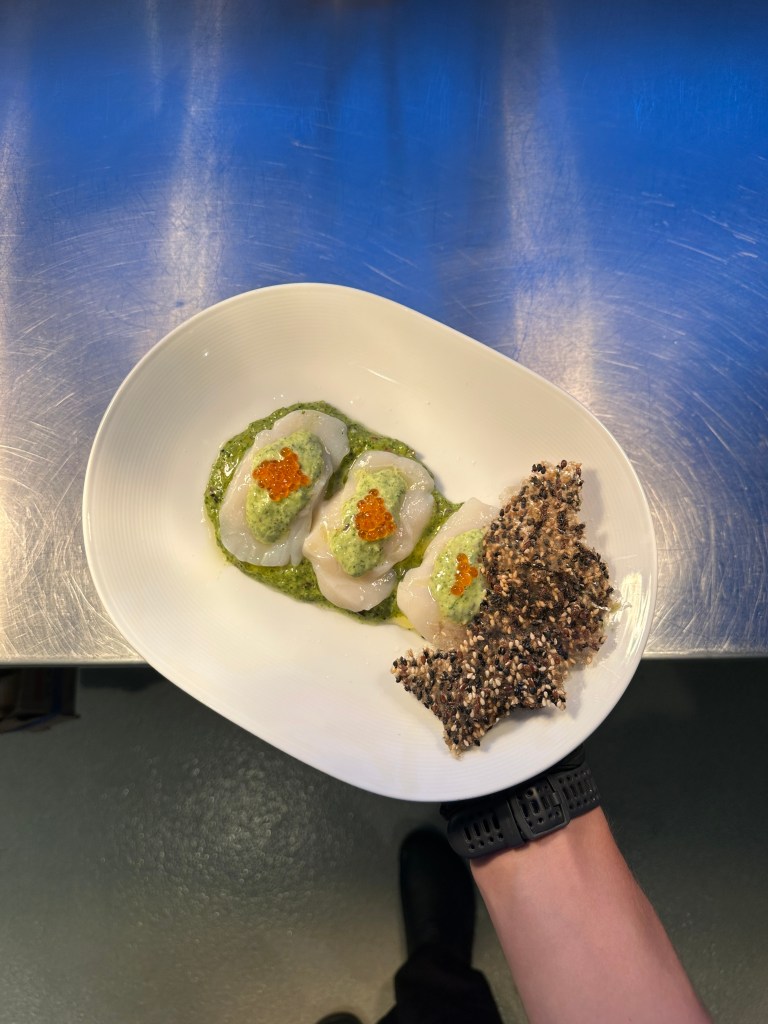
    The cold-smoked scallops developed a delicate smoky aroma without overpowering the natural sweetness of the scallop. The texture remained tender and slightly firm, indicating proper temperature control during the cold-smoking process. Visually, the scallops exhibited a light golden hue on the surface, suggesting a successful absorption of smoke.

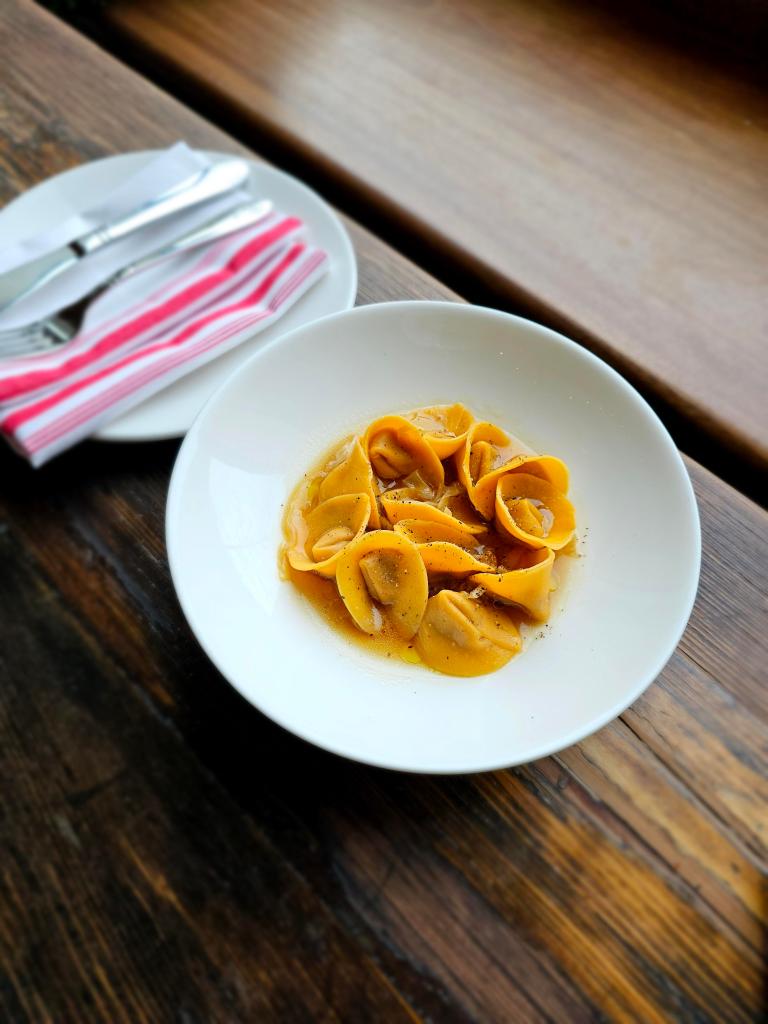
    The rabbit tortellini in beef consommé showcased a strong contrast between the richness of the broth and the subtle, slightly gamey flavor of the rabbit filling. The tortellini dough maintained its structure while remaining soft and smooth, demonstrating correct lamination and shaping techniques. The clear consommé had a clean finish that elevated the overall sensory experience.

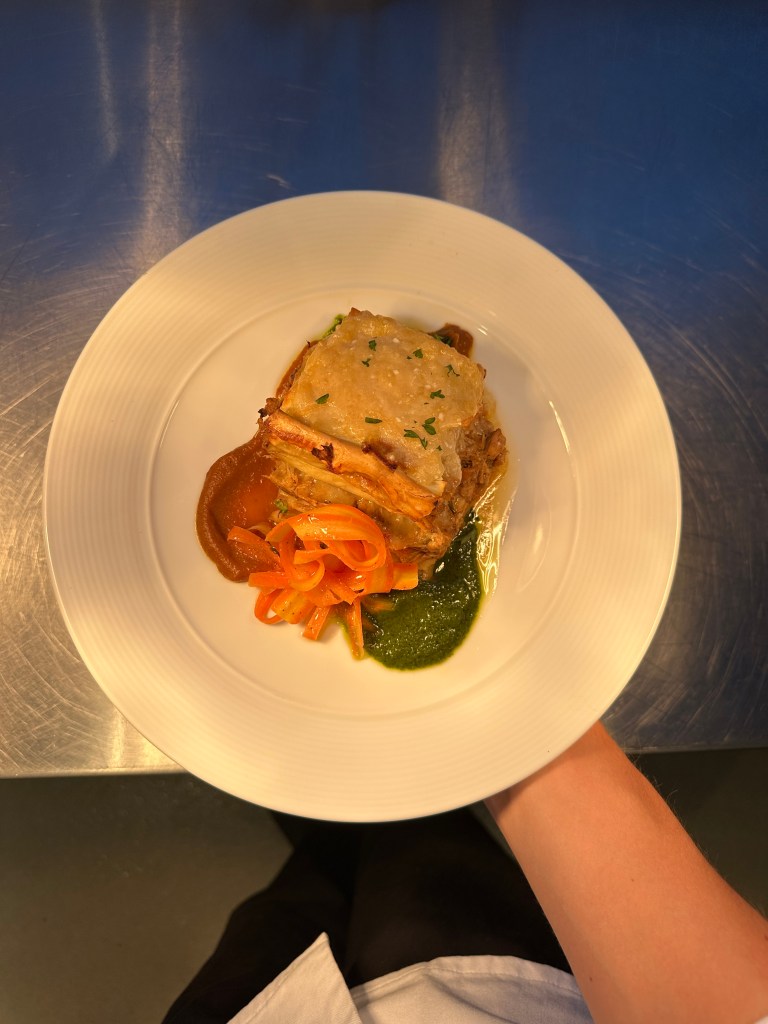
    The rabbit lasagna delivered a satisfying combination of layers, with the rabbit providing a lighter, more delicate protein flavor compared to traditional beef. The béchamel contributed a creamy mouthfeel that balanced the rabbit’s slight gaminess, while the pasta sheets were cooked al dente. The final product was cohesive, visually appealing, and offered a well-rounded flavor profile across all components.
    Sustainability Analysis
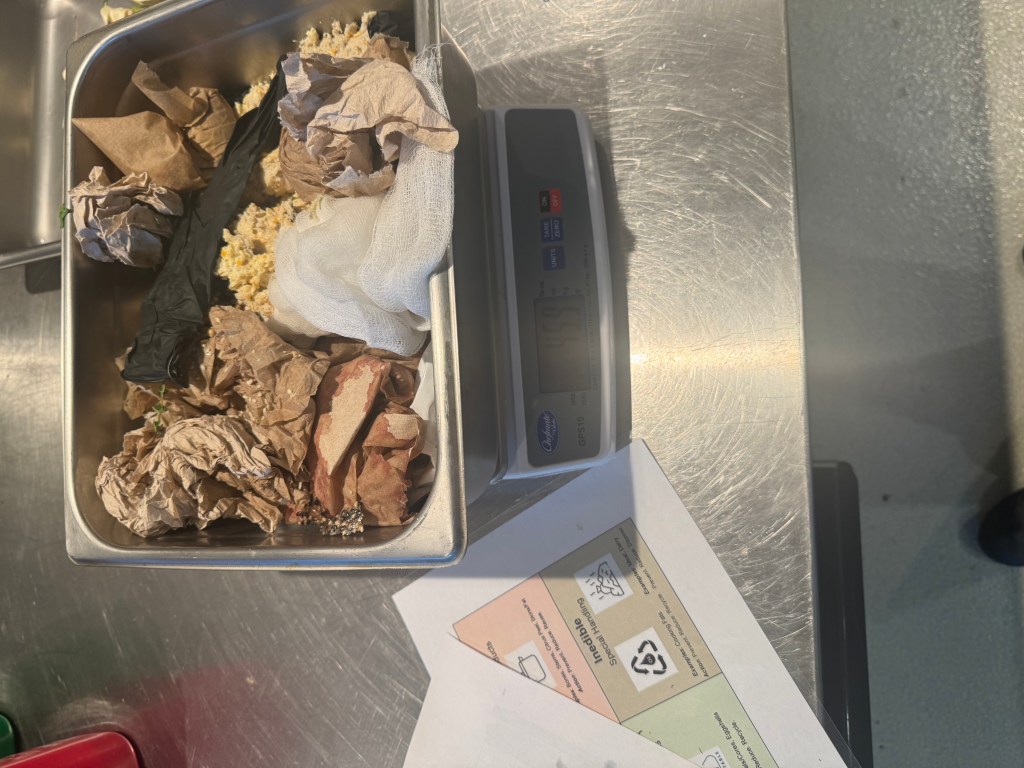
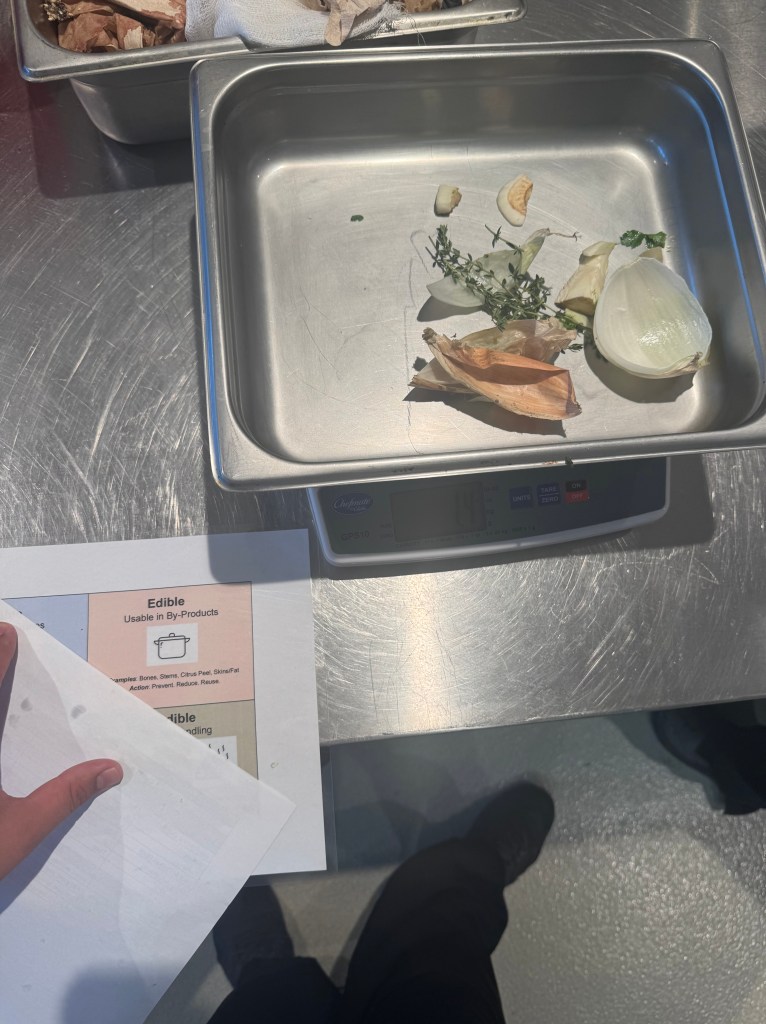
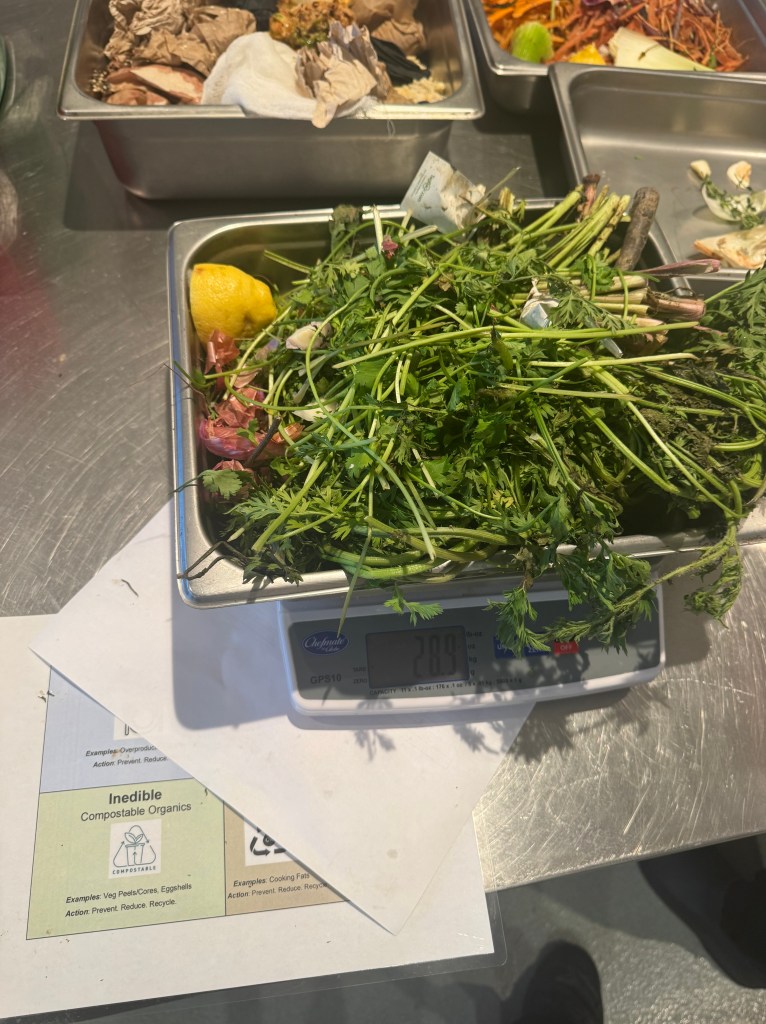
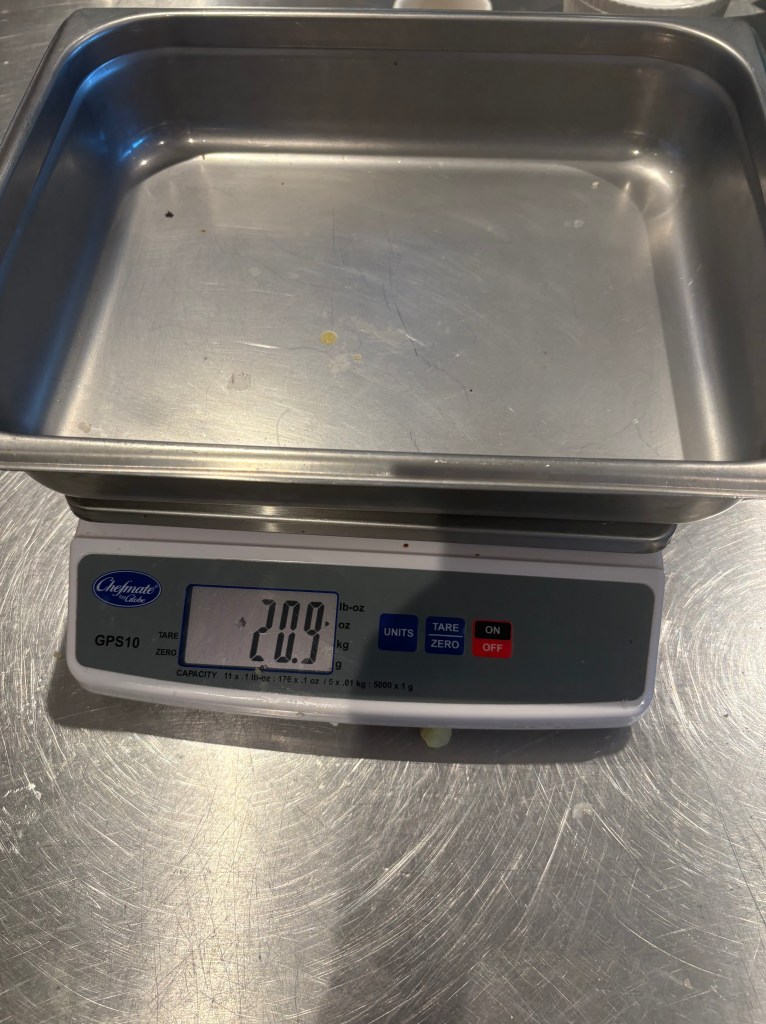
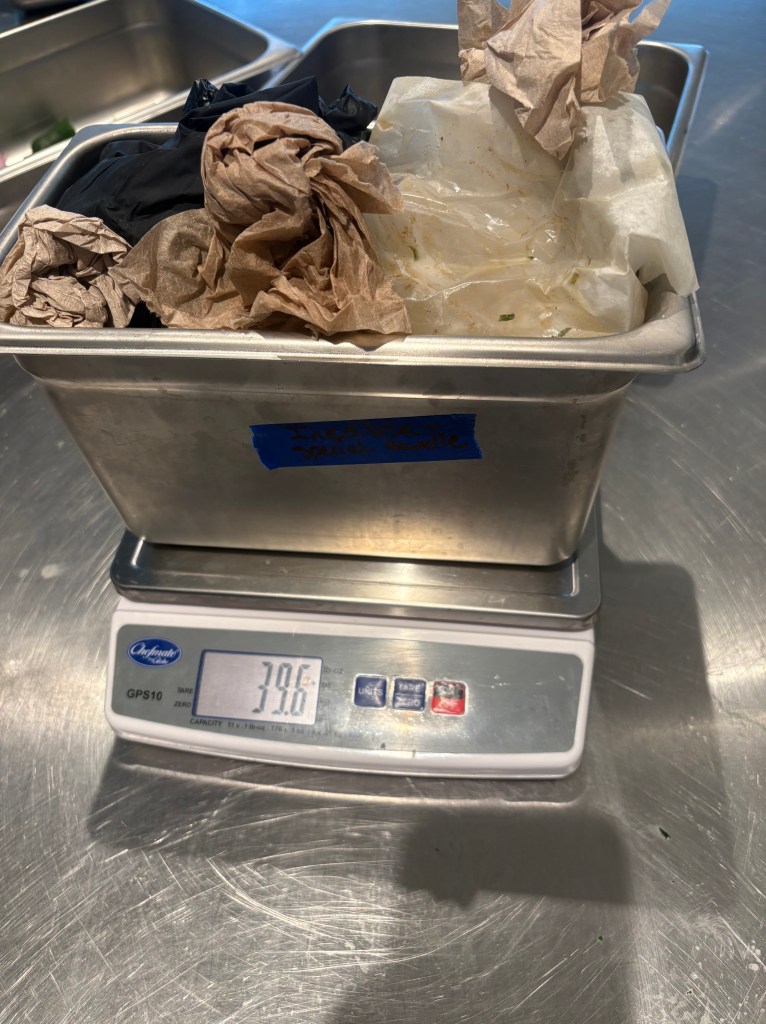
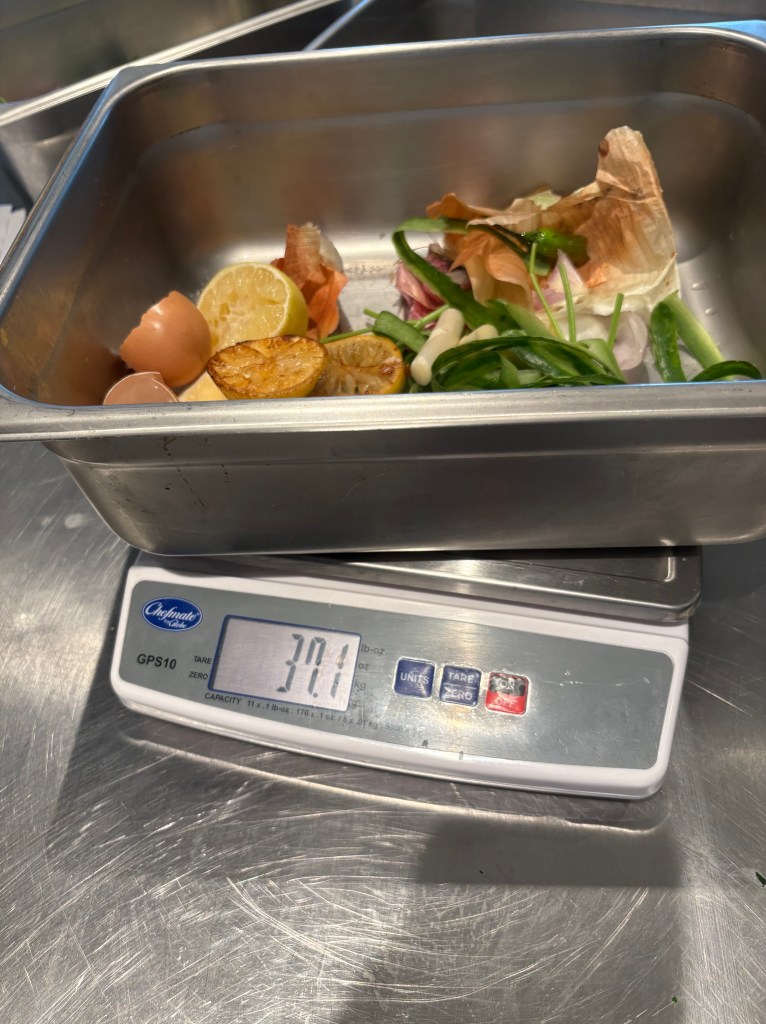
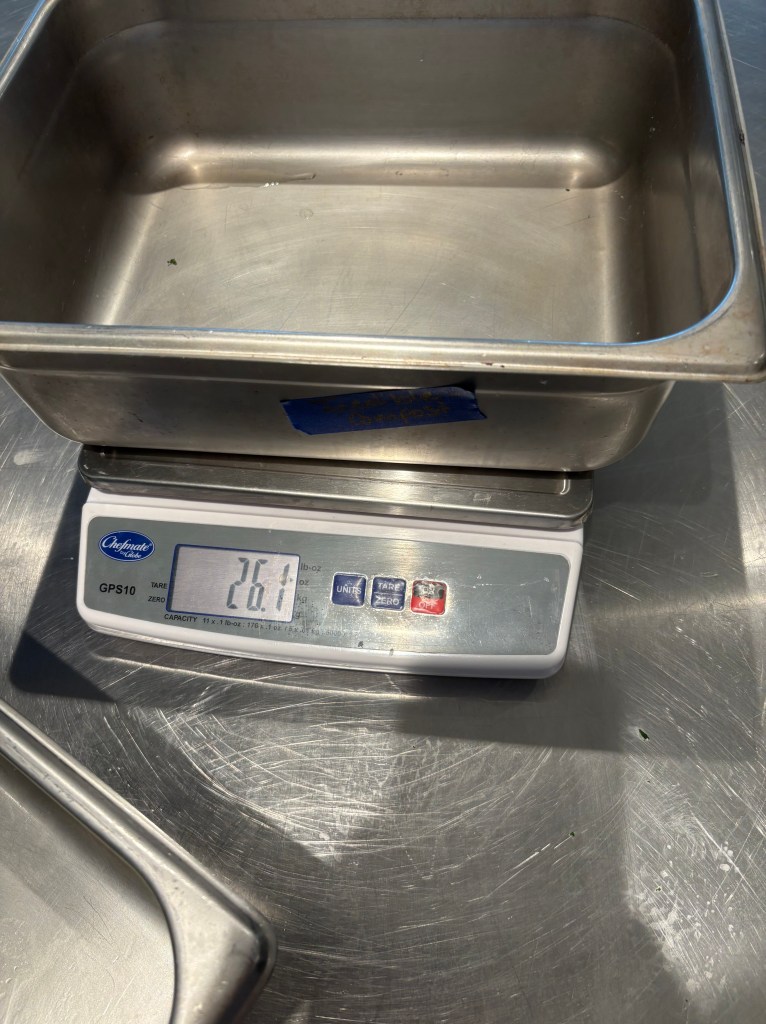
    Our usable waste, weighing in at 45.3oz was due mostly to our mise and the typical scraps that come with a mise. LeanPath, a food waste-prevention company approximates this waste costing $0.07/oz, meaning $3.17 was wasted on this waste.

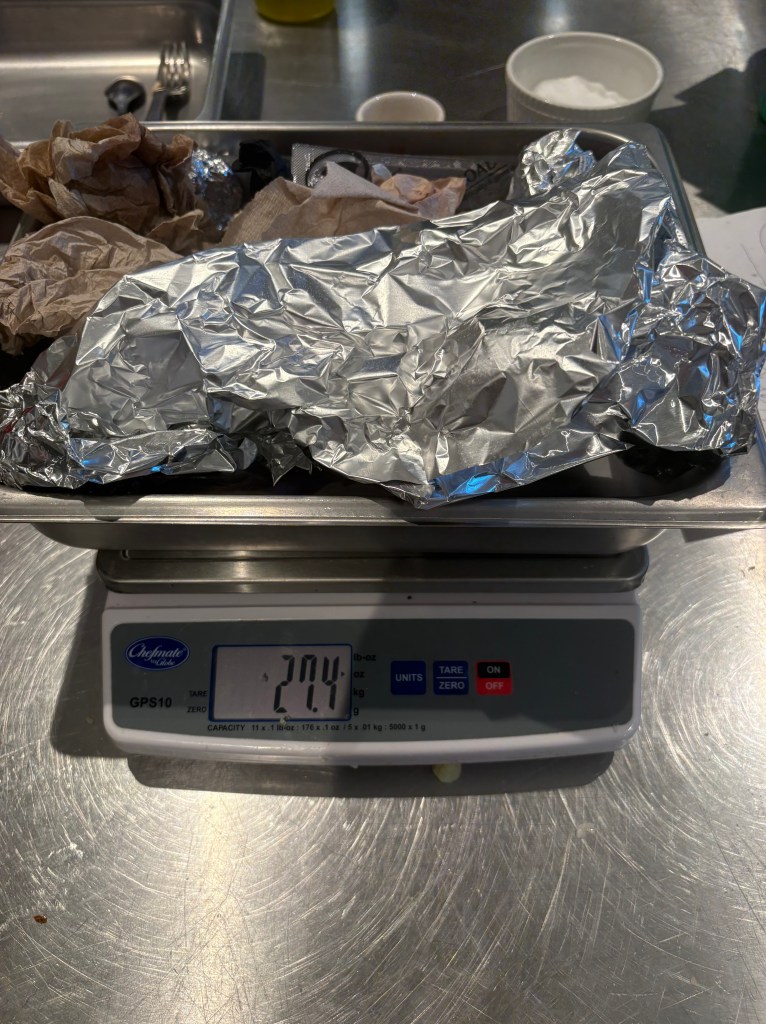
    Our unusable waste, weighing in at 55oz was due to unusable fish shells and our tomato container. LeanPath also approzimates this waste costing $0.07/oz, meaning $3.85 was wasted on this waste.

    I think our waste being lower than last week is a good sign, and that our group was definitely more attentive to our waste. We were also much more mindful as to where we placed items.

    To be more sustainable in future labs, I will focus on reducing overall waste by planning portions more carefully and using ingredients more efficiently. I will make better use of leftover components by repurposing them into other dishes rather than discarding them. Additionally, I’ll be more mindful of energy and water usage during preparation and cleanup. By being more intentional with resources, I can help create a more environmentally responsible kitchen environment.

    This week, the WACS Sustainability Certification mostly influenced my lab this week, because I feel that I was much more understanding of the different categories of waste.

  • Module 6: Week of October 12-18, 2025

    Introductions

    I am so excited about this week because not only do we have an extraordinary guest chef coming to speak with us (ATL-based Chef Craig Richards), but we are also making rabbit and pasta which are two of my favorite things, especially when put together!

    When discussing rabbit, we will be talking about how to break it down, the best ways to cook it, and what it pairs well with. As for pasta, we are switching from extruded pasta like we did the other week, and making egg-based pasta doughs and rolling them out.

    Background Information

    Rabbit in the realms of the cooking world can be divided into two categories: wild and farm-raised. Wild rabbit often is much darker and gamier in flavor as opposed to farm-raised rabbit, which are more white and can often be cooked down to be soft and buttery. Wild rabbit’s dark, gamy, and earthy nodes are due to the wild-nature of the rabbit being very active. Farm-raised rabbits are often fatter and lazier resulting in less dark meat and more tender results. Wild rabbit should be used in long-cooked sauces such as ragús, whereas farm-raised rabbit offers versatility of grilling, braising, roasting, sautéing, and more (The Gourmet Traveller 2012).

    Fresh pasta can be a beast to conquer, with its process taking not much time, but the time it does take being very involving. The process itself is simple, with gently incorporating eggs (yolks and/or whole) into a nice 00 flour. Once incorporated, you have to knead the dough for several minutes until the dough becomes smooth and not floury. You must let it rest after this step before you being rolling to let the gluten relax. Once rested, then you can begin rolling the dough out, either by-hand or using a pasta roller. This dough is much richer and yellower than our extruded pasta we made a few weeks ago (Jamie Oliver n.d.).

    Recipe Research & Development

    This week, it is our understanding that all recipes have been given to us, so as for us to learn more how to deal with recipes rather than coming up with our own.

    Plating Inspiration
    Plan of Work & Recipes
    Works Cited

    Oliver, J. (n.d.). A basic recipe for fresh egg pasta. Jamie Oliver. Retrieved from https://www.jamieoliver.com/recipes/pasta/a-basic-recipe-for-fresh-egg-pasta/

    The Gourmet Traveller Team. (2012, August 14). How to cook rabbit. Gourmet Traveller. Retrieved from https://www.gourmettraveller.com.au/explainers/how-to-cook-rabbit-2138/

  • Sensory Results

    This lab was one of the most informative labs I’ve had yet, especially thanks to the inclusion of Chef Rob McDaniel as our guest chef for the day. His insight for each of the dishes, including plating, seasoning, and general knowledge of each ingredient contributed completely to a very informative and fun class.

    First up, our Ostrich Steak was one of the more beautiful dishes I’ve done yet in our lab, and what made it even better was that each aspect of the dish was seasoned and flavored well. The steak was nicely medium-rare, with a crisp exterior and juicy yet gamey interior. Our salad was overdressed which was on me, but the flavor of the preserved lemon dressing was exceptional. Our glaze for the ostrich led to a wonderful umami taste with a little sweetness and afterwards a good kick of spice.

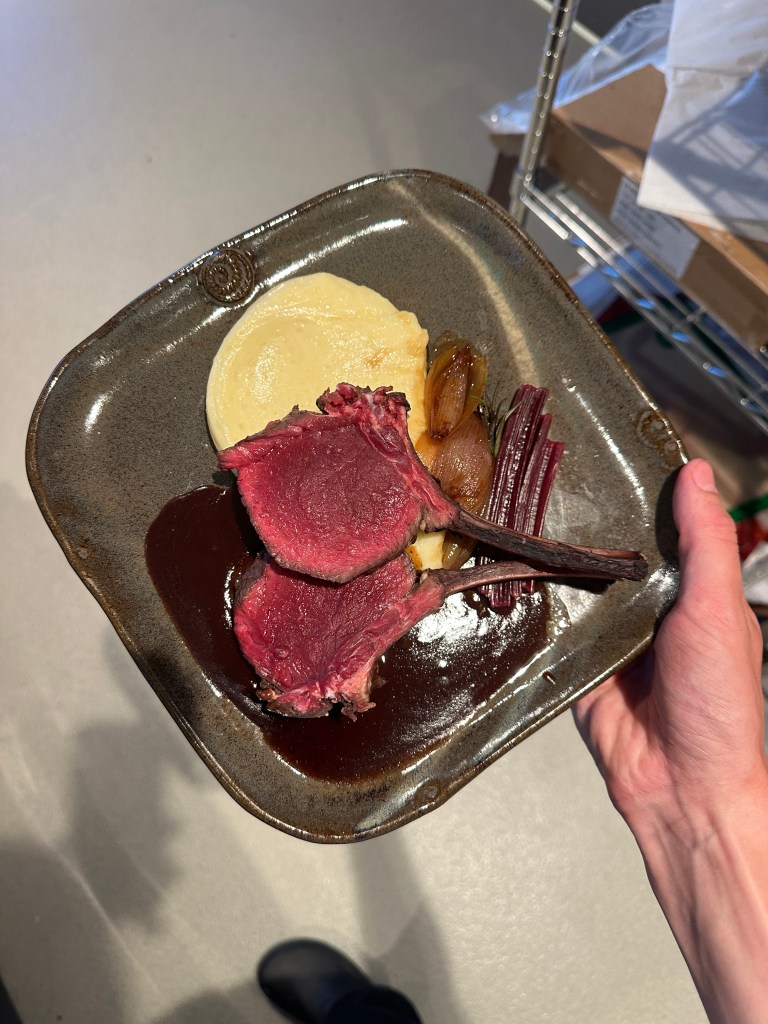
    After that was our Venison with pomme aligot and braised shallots. While the plating was not where I wanted it, I appreciated the help I got from Chef McDaniel on how to break down the Venison into shanks, and how to better my plating. The Venison was less tough than the Ostrich steak. The pomme aligot in my opinion needed more salt, but had a good cheesy consistency that we were wanting. Our braised shallots were simple, yet deep with flavor.

    Sustainability Analysis

    Our usable waste, weighing in at 45.3oz was due mostly to our mise and the typical scraps that come with a mise. LeanPath, a food waste-prevention company approximates this waste costing $0.07/oz, meaning $3.17 was wasted on this waste.

    Our unusable waste, weighing in at 55oz was due to unusable fish shells and our tomato container. LeanPath also approzimates this waste costing $0.07/oz, meaning $3.85 was wasted on this waste.

    I think our waste being lower than last week is a good sign, and that our group was definitely more attentive to our waste. We were also much more mindful as to where we placed items.

    I think next week that I will personally pay more attention to my waste, as I think overall we are doing well, but my personal performance could be better. I would like to pay attention to when I am tossing unusable waste that I am trying hard to use up all of it to avoid excess.

    This week, the WACS Sustainability Certification mostly influenced my lab this week, because I feel that I was much more understanding of the different categories of waste.

  • Module 6: Week of October 5-11, 2025

    Introductions

    This week we begin our studies into wild game. I am very excited about this next subject of our class because it will deal with the proper handling and cooking of different game meats, all of which I have very little knowledge of.

    We will be making arancini with a red pepper velouté, an ostrich steak salad, and a Denver steak served with pomme aligot and braised shallots with maitre d’hotel butter.

    Background Information

    When talking about venison, one is typically talking about different game such as deer, elk, ox, etc.. A peculiar note I found while researching venison is that it can be eaten raw, as diseases from eating venison raw are highly unlikely. This also means that it is ever so important to cook game meat such as venison to a rare to medium-rare temperature as it will toughen up and become more gamey the longer it cooks (Shaw 2022).

    Similar to venison and most game meats, ostrich also requires little cooking as to not overcook its pieces of meat. It too, like the venison, will become much more tougher the longer it cooks. Ostrich has a very low fat content, meaning that most of the flavor comes from the meat itself, unlike beef in which most flavor comes from the fat. Another helpful component of ostrich cooking is to marinate the meat so as to develop rich flavors into the mean being that the meat is the central source of flavor (American Ostrich Farms n.d.).

    Recipe Research & Development

    This week, it is our understanding that all recipes have been given to us, so as for us to learn more how to deal with recipes rather than coming up with our own. I am excited to play around with the arancini, as I have made those a few times and enjoyed each time. I am also eager to see what my group would like to do with the different meats.

    Plating Inspiration
    Plan of Work & Recipes
    Works Cited

    American Ostrich Farms. (n.d.). How to cook ostrich meat. American Ostrich Farms. https://www.americanostrichfarms.com/blogs/news/how-to-cook-ostrich-meat?srsltid=AfmBOoqrGy6WFk6DQrsSIDViavuzZkRd0Vvrlsq8hR_r7FjsBZ5SQTKF

    Shaw, H. (2022, March 3). Venison 101. The Virginia Sportsman. https://thevirginiasportsman.com/recipes/venison-101Virginia 

  • Sensory Results

    This week’s lab had lots of great seafood flavors with different levels of acidity and textures. The oysters were so cool to learn more about, since I have only had one oyster in my life. We did a martini-style oyster and a grilled tomato-cucumber oyster. Each had great tastes and flavor, with the martini one being especially delicious. The tomato oyster had just a touch too much acidity to it, but the added crunch of the cucumber was really nice.

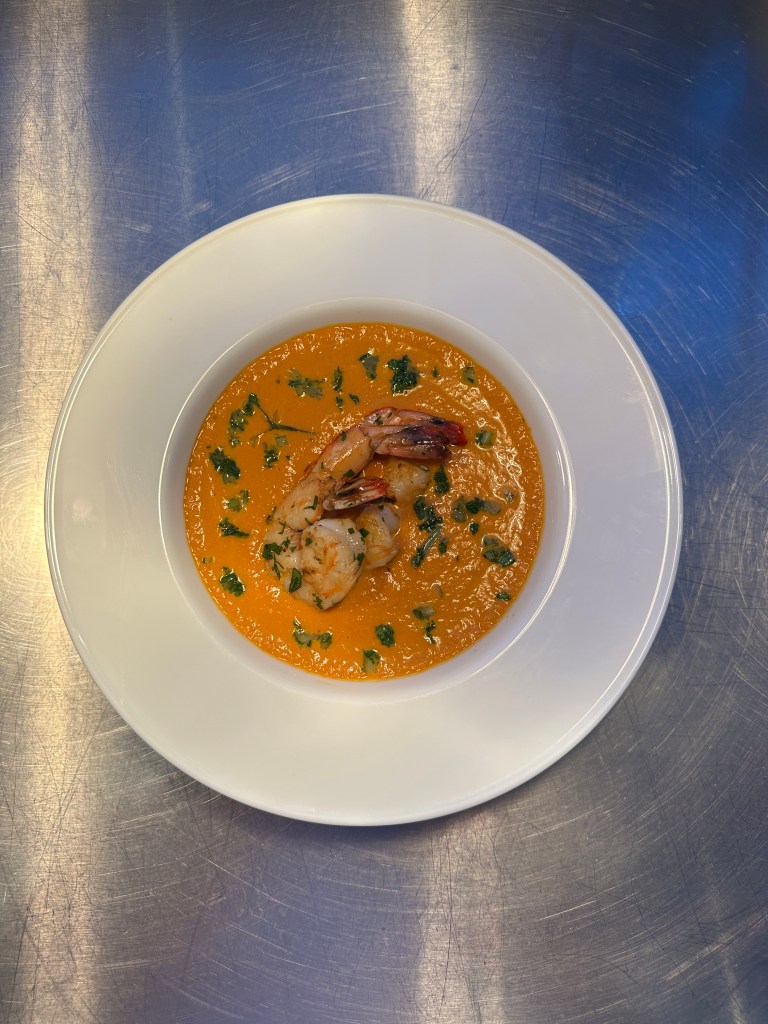
    For the shrimp & fennel bisque, I did not strain it enough, so it still was pretty chunky. The vegetables may not have been completely softened either, which both contributed to a chunkier soup. The taste was really good, the texture was just lacking the classic bisque texture.

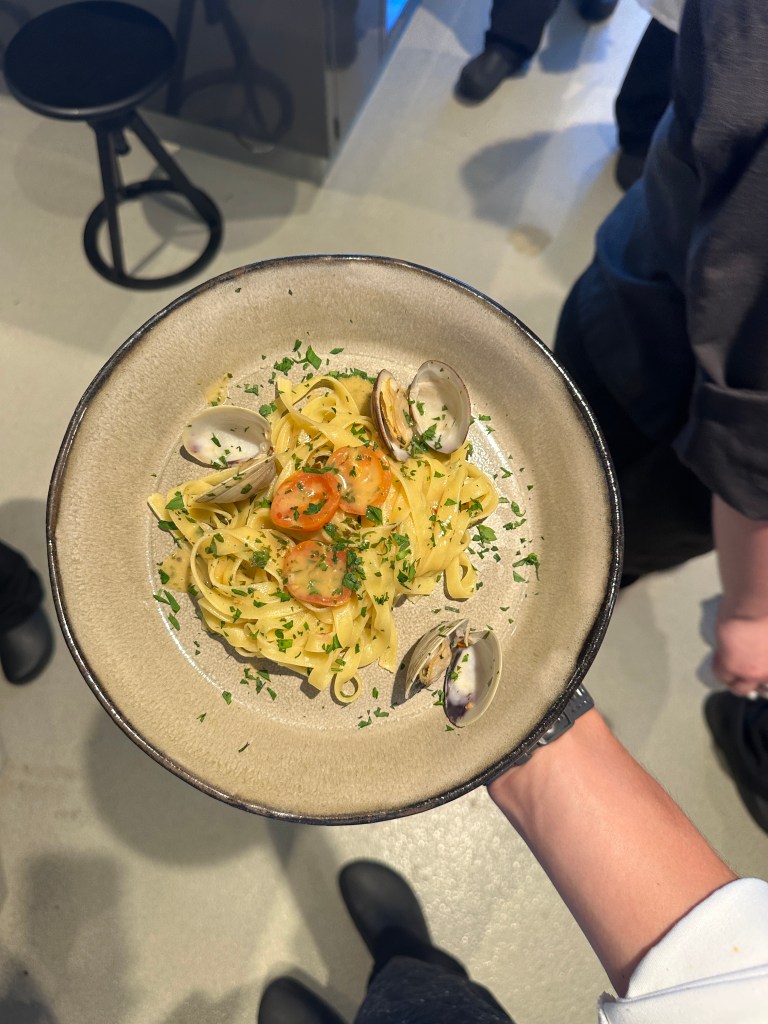
    Our pasta vongole was really great, as it is a dish that is really uncommon. The clams had a wonderful taste to them, however our sauce was too acidic. I think adding a touch less lemon juice and cooking off the wine some more could contribute to a better flavored sauce.

    Sustainability Analysis

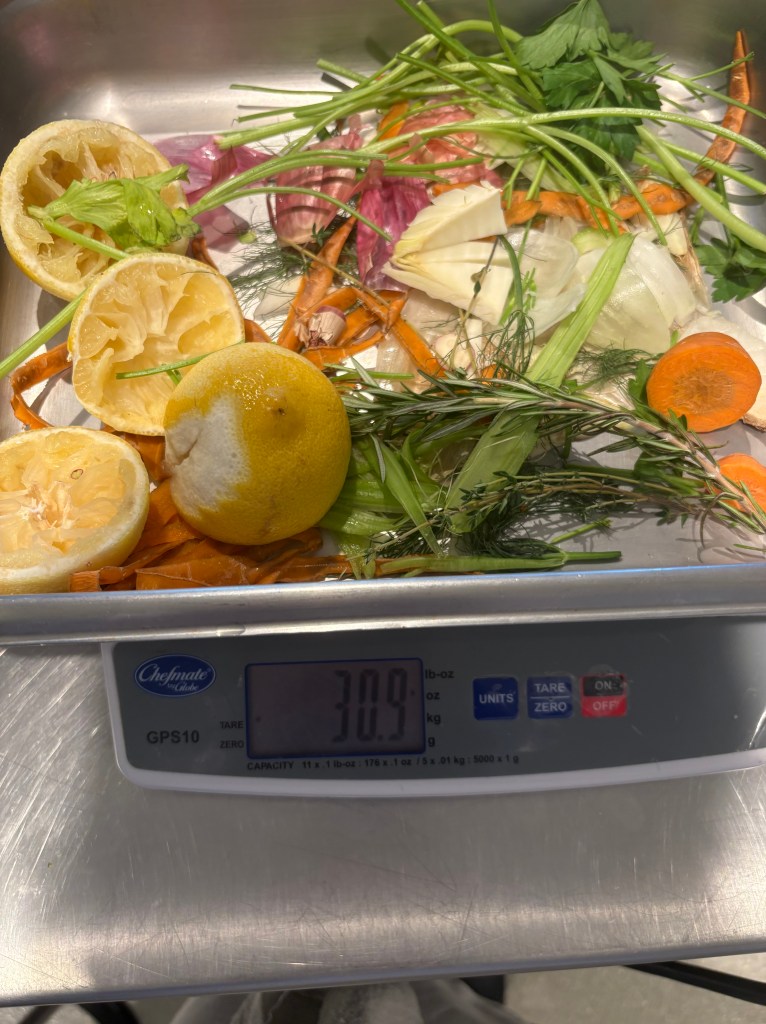
    Our usable waste, weighing in at 30.9oz was due mostly to our mise and the typical scraps that come with a mise. LeanPath, a food waste-prevention company approximates this waste costing $0.07/oz, meaning $2.16 was wasted on this waste.

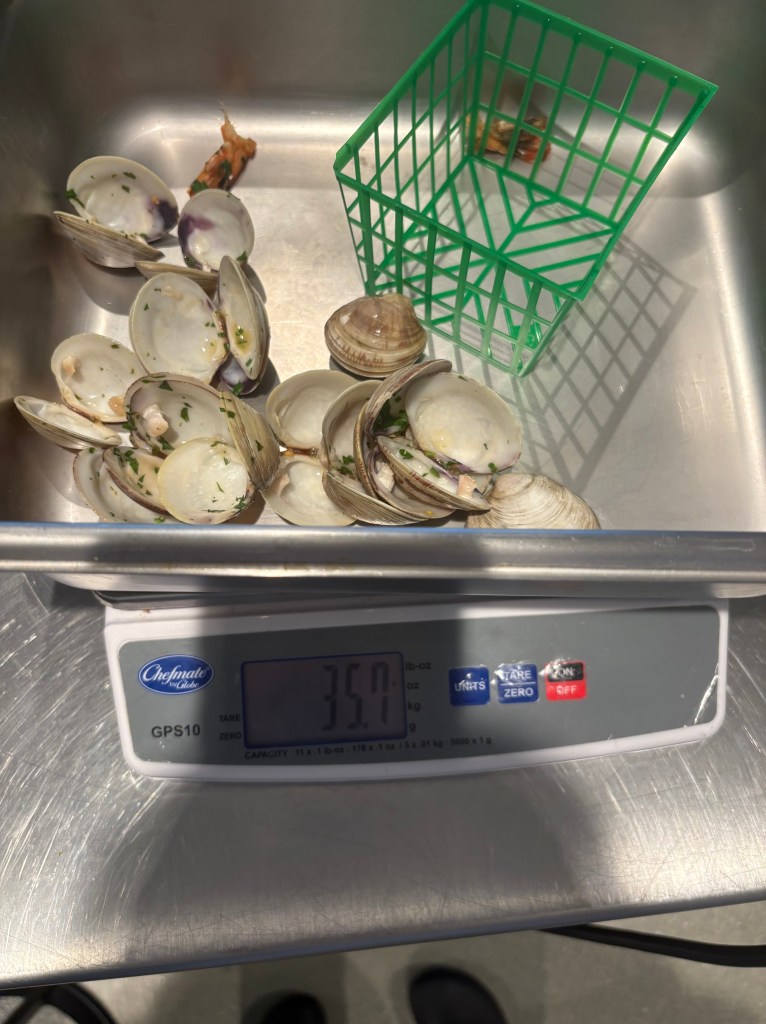
    Our unusable waste, weighing in at 35.7oz was due to unusable fish shells and our tomato container. LeanPath also approzimates this waste costing $0.07/oz, meaning $2.50 was wasted on this waste.

    I think for me and my group, our overall performance was much better than last week. We only wasted in two categories which I would say is really great. Our waste was also much lower than last week. In lab, we definitely were all more aware of our waste, and made sure we were practicing proper waste practices such as separating our waste properly and communicating with each other to eliminate unnecessary waste.

    I think next week that I will personally pay more attention to my waste, as I think overall we are doing well, but my personal performance could be better. I would like to pay attention to when I am tossing unusable waste that I am trying hard to use up all of it to avoid excess.

    This week, the WACS Sustainability Certification mostly influenced my lab this week, because I feel that I was much more understanding of the different categories of waste especially when it comes to seafood.

  • Sensory Results

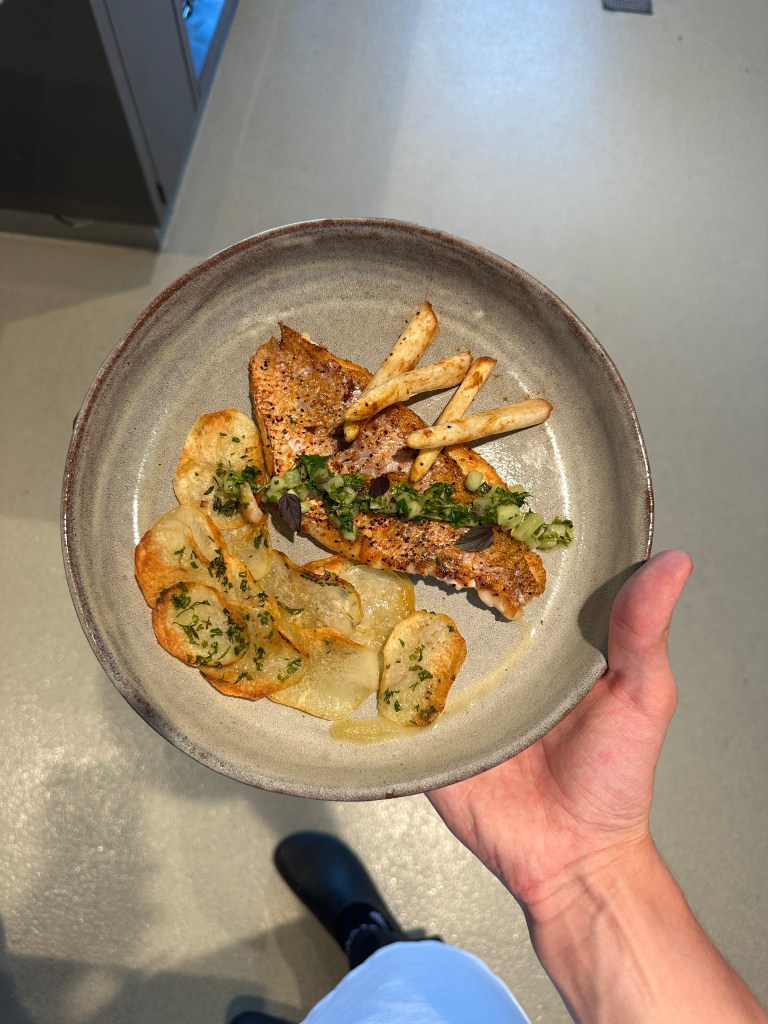
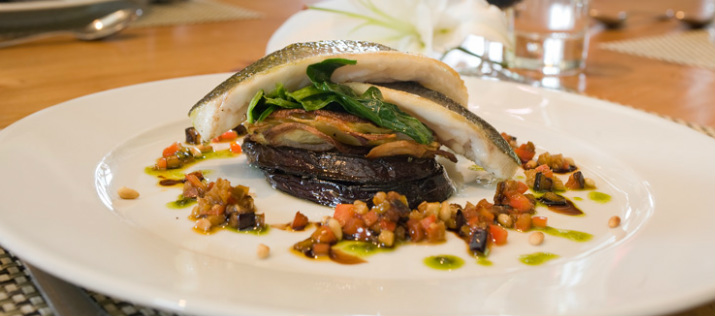
    Last week’s dishes were all very well made in terms of each aspect of each dish were well-seasoned, and had excellent sensory attributes. For example, the snapper (photo above) had a crisp crust and juicy interior, which paired well with the crunchy potatoes, crisp cucumber chimichurri, and slightly firm white asparagus.

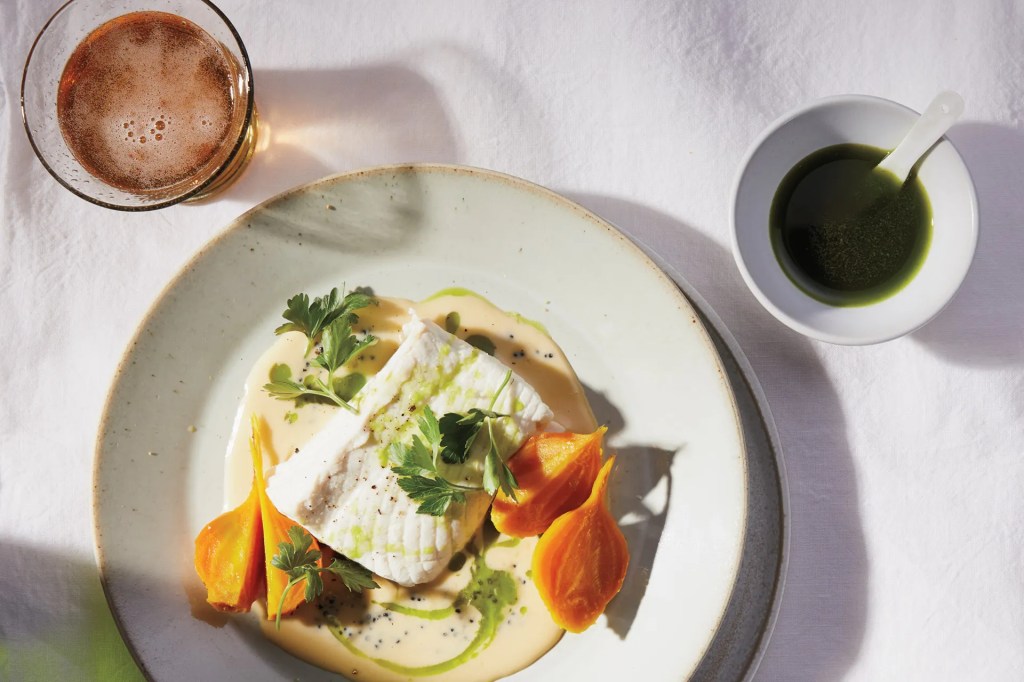
    The halibut was nice, but the parmesan & spinach soufflé was the real star in my opinion. Ours came out nice and cheesy, which paired excellent with the halibut and the tapenade.

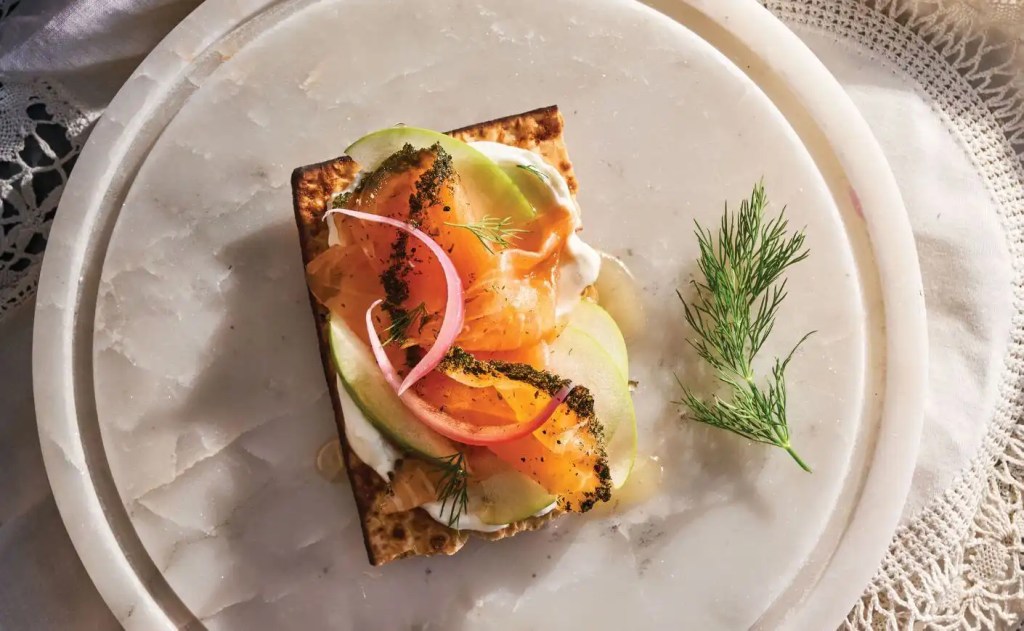
    I really enjoyed the gravlax, much more than I thought. I really appreciated the different flavors of the salmon, while also having an almost melt-in-your-mouth consistency to it.

    Sustainability Analysis

    Most of this waste was due to excess during mise en place, with the paper towels coming from drying the fish.

  • Module 6: Week of September 28-October 4, 2025

    Introductions

    This week, we will be diving into the art of making homemade pasta, while also serving and discussing clams, oysters, and shrimp.

    I am very excited for this week’s lab because it combines two of my most favorite foods: pasta and fish. I particularly love shrimp, but have actually only had oysters only once in my life. I am looking forward to trying them now, and talking more about their variations.

    Background Information

    For making homemade pasta, I dived into Missy Robbins’ book Pasta. When discussing making pasta, Robbins explains two different ways she prepares pasta. First, she makes a well in the center of a pile of flour, then adds eggs/water/etc. which is then slowly incorporated into the flour and kneaded until the dough forms. Secondly, she commonly will use her stand mixer to knead the dough quickly and efficiently. She prefers this method for those who like to make pasta more-often.

    For the clams, I looked into Frank Stitt’s Bottega Favorita, which Stitt explains is a versatile ingredient that, when used in dishes like our pasta this week, can pair well with spicy chili peppers and also pancetta or bacon. He recommends always purchasing extra clams in the event that some fail to open and/or have to be discarded when cooking.

    Recipe Research & Development

    This week, I will be discussing with my group to see the direction we wish to with for the oysters. I know that Emma has knowledge of cooking oysters, and I do not know much. We have discussed an Italian martini-style oyster as well as a Bloody Mary oyster.

    For the Linguine all Vongole, I plan on playing off of Frank Stitt’s Bucatini with Clams, Pancetta, Hot Chile, and Rapini, which combines the clams with crisp pancetta and spicy chilies.

    Plating Inspiration
    Plan of Work & Recipes
    Works Cited

    Robbins, M. (2021). Pasta. Ten Speed Press Publishing.

    Stitt, F. (2009). Frank Stitt’s Bottega Favorita. Artisan Publishing.

  • Module 6: Week of September 21-27, 2025

    Introductions

    This week we are getting introduced further into fish and its butchery. Our method of cooking for the week is gravlax, a Nordic sugar-salt cured salmon. Gravlax will be a great turning point as we have been discussing food preservation and curing, and this is a very interesting and, in our area, un-common dish. Our ingredient for the week is halibut, which we will be poaching and serving with a beurre blanc and a parmesan & spinach soufflé.

    Background Information

    I am really excited about this lab because I love fish and I love cooking with fish. While pan-searing and poaching fish are both methods I have used before when preparing fish, I do not recall ever using halibut or branzino. I have never heard of, tried, or made gravlax, so I am most intrigued to see what the taste and texture is of this cured salmon dish.

    When making gravlax, it is important of three things: the curing salts and sugars, the curing time, and the pressure while curing. It is crucial to cover the entire piece of salmon in salt and sugar so as to preserve and cure the salmon, rather than letting it go bad. Time is key in this dish, particularly a long curing time of around 5 days to get a deep flavor and intriguing texture. Lastly, putting pressure on the salmon while curing is crucial to ensure all moisture is being derived from the salmon. This will help so that the salt and sugar are not the only things draining moisture out of the salmon (Hamilton 2024).

    Poaching fish in a “brothy sauce” (Roman 2025) is a foolproof method to prepare fish, especially when using mild-flavor varieties like we are doing with halibut. Letting the fish cook in the sauce for not too long (5-10 minutes depending on the cut) is key while ensuring vegetables, seasonings, and other accompaniments pair nicely with the halibut (Roman 2025).

    Recipe Research & Development

    This week, we are given recipes for each dish so as to follow a format of following a recipe and taking our own spin on those recipes. For the gravlax, I plan on staying mostly on the same track as the recipe. For the halibut and soufflé, I’d love to play around with the idea of simplicity in each, while each being rooted in local herbs and vegetables. For the branzino, I’d love to keep it simple, while grounding the potatoes and cauliflower in herb-based, creamy bases.

    Plating Inspiration
    Plan of Work & Recipes
    Works Cited

    New York Times Cooking. (n.d.-a). Gravlax with herb butter. The New York Times. https://cooking.nytimes.com/recipes/1020876-gravlax-with-herb-butter

    New York Times Cooking. (n.d.-b). Tomato-poached fish with chile oil and herbs. The New York Times. https://cooking.nytimes.com/recipes/1020279-tomato-poached-fish-with-chile-oil-and-herbs

  • Sensory Results

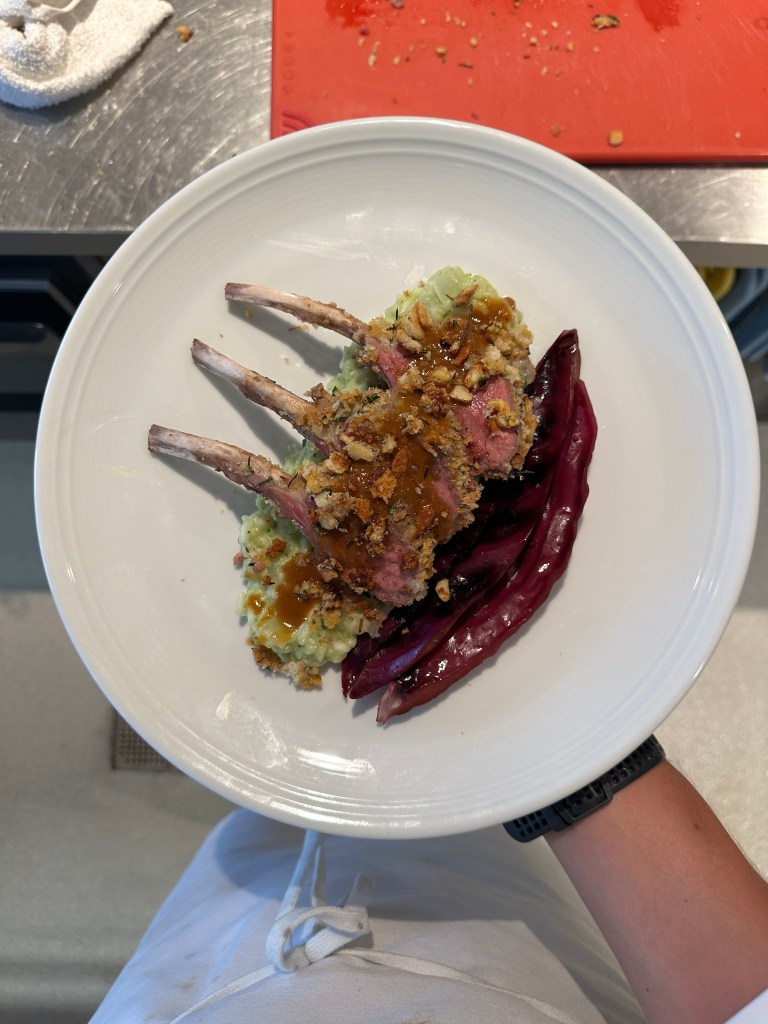
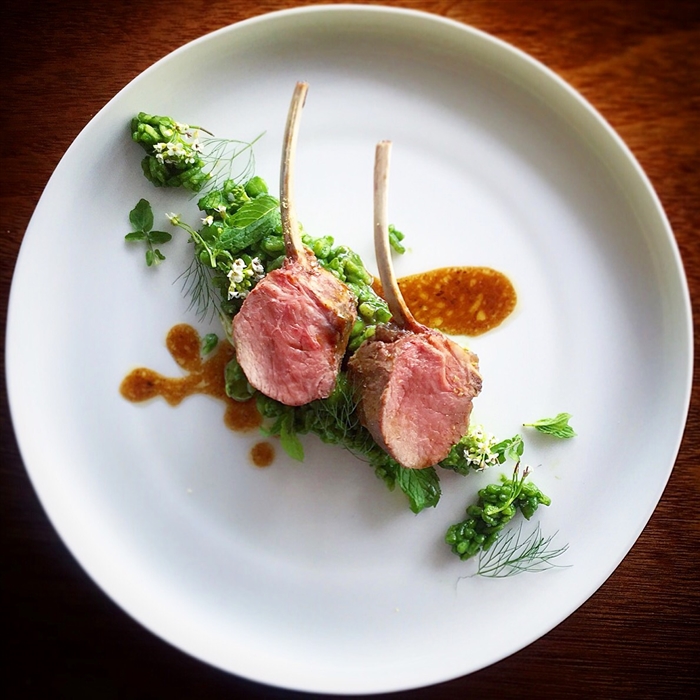
    Last week’s lab was a lot of work, with numerous dishes needing to be made as well as many ingredients that needed to be used. Our lamb was cooked very nicely, with an achievement in getting that medium-rare that chef wanted. I really liked the crust of the lamb, as it countered the juicy interior of the lamb. The risotto and cabbage each were delicious in that they were seasoned very well and also cooked each to perfection. The risotto was right at al-dente, while the cabbage had just a little bit of a bite so as to not be complete mush.

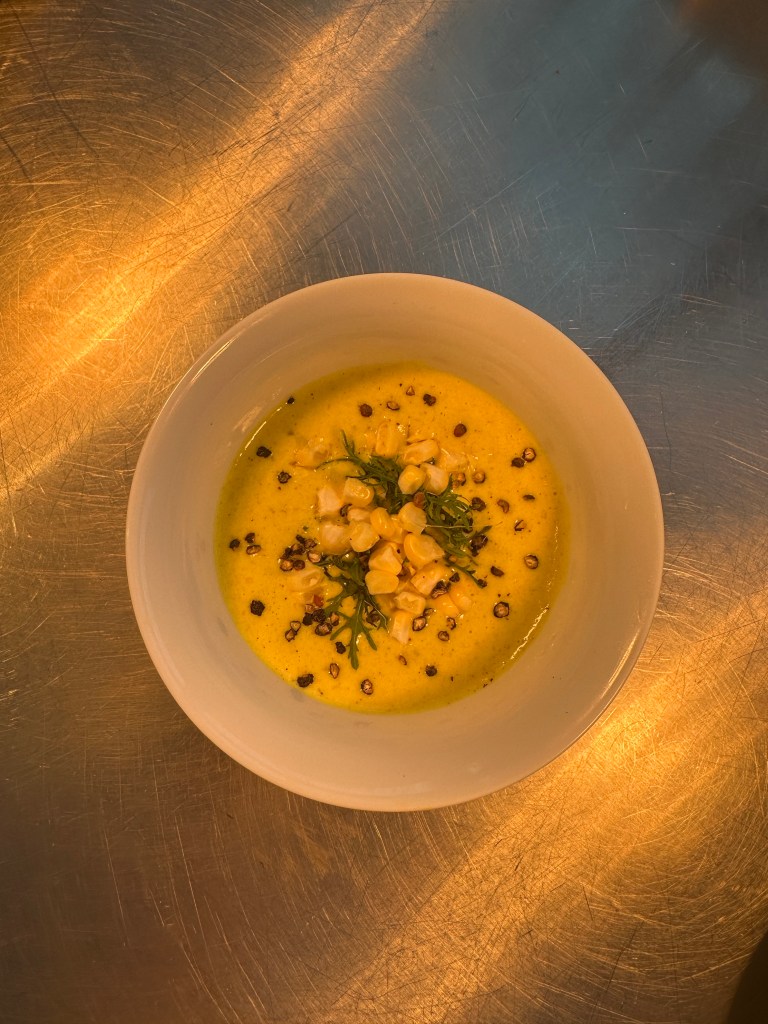
    Our Corn Bisque was one of my favorites, despite having an overwhelming amount of curry flavor (haha) which while was nice, would definitely not be pleasing to anyone who doesn’t like curry. I added some jalapeños to the onion while sautéing, and this added a nice spice to the soup.

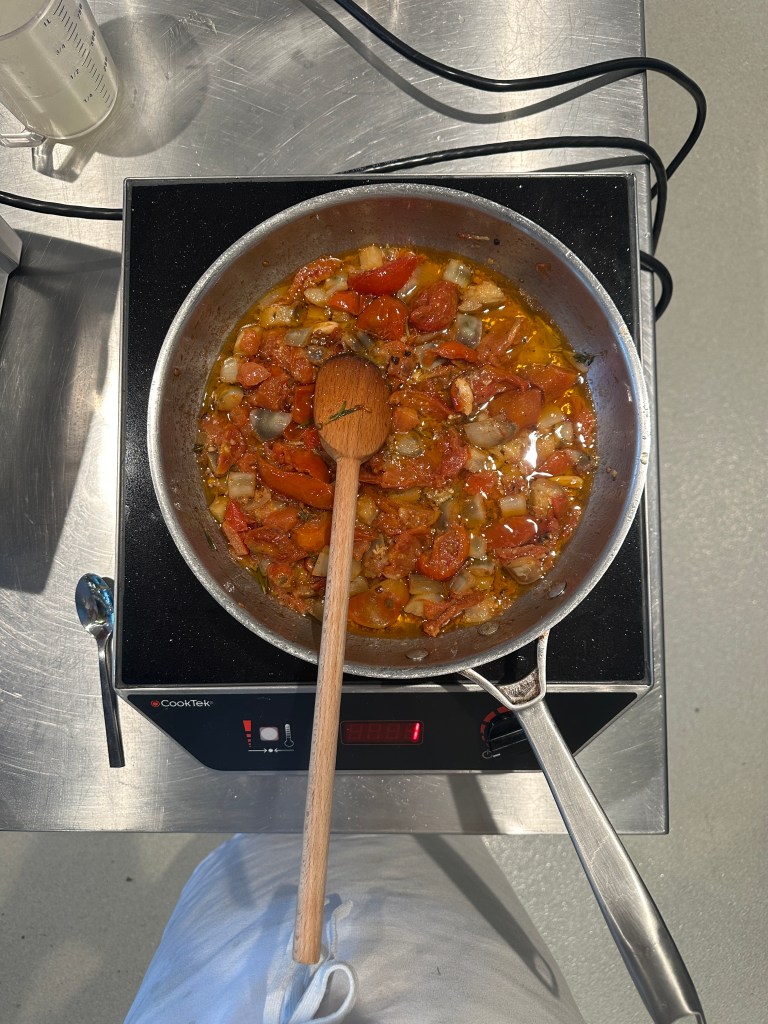
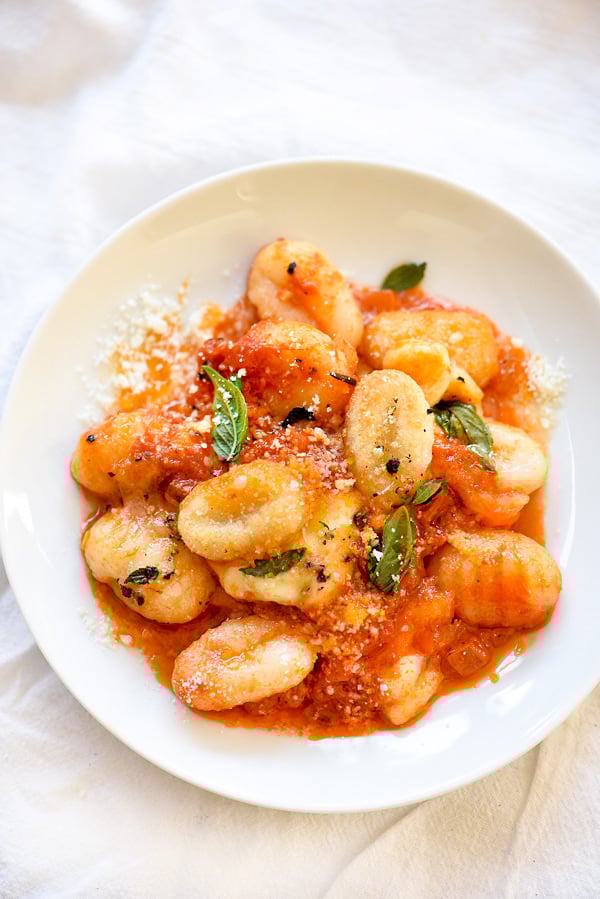
    Our gnocchi was somewhat pleasant, however I cut my gnocchi too large so they were slightly tough in texture (like puddy). I tried to make a sauce using excess ingredients chef had given me, and I wanted to do a variant of a tomato sauce. The sauce did not come out well as I had hoped. While the consistency was good and smooth, the flavor was off due to the use of too many roasted tomatoes. I will definitely know to fix this before making another tomato sauce.

    Evaluation of Techniques

    Our method this week was making gnocchi, which I really enjoyed getting to be in the process of. Despite cutting my individual gnocchis too small, I really loved getting to watch the process of making the dough, and the process of cutting, cooking, and serving the gnocchi. I found an online method of using a piping bag to pipe and cut small gnocchi, which I would be interested in trying soon (Morocco 2013).

    Our ingredient this week was rack of lamb. I really loved this ingredient because not only was ours cooked nice and medium-rare, the crust was perfectly crisp and seasoned well. It added nice texture to the lamb, while also adding an extra boost of flavor.

    Conclusion

    For next week, I would love to improve on my attention to flavor combinations, and working hard to make sure ingredients are getting complemented and not overwhelmed.

    All-in-all, I really appreciated the hustle of this lab, and hope to use my mistakes from last week to better our lab this week.

    Works Cited

    Morocco, C. (2013, January 23). The easiest gnocchi technique the world has ever seenBon Appétithttps://www.bonappetit.com/test-kitchen/cooking-tips/article/the-easiest-gnocchi-technique-the-world-has-ever-seen

  • Module 5: Week of September 14-20, 2025

    Introductions

    This week in lab, we are going to be making fresh gnocchi and roasting racks of lamb, along with preparing a simple creamed corn bisque, some parmesan risotto, vegetables, and a jus for the lamb.

    Lamb happens to be one of my more favorite meats, so I am very excited to be learning more about how to butcher pieces of lamb, and techniques for preparing delicious racks of lamb.

    I love making fresh pasta, but have never gotten around to making gnocchi dough, so I am eager to try-out this dough and roll out the gnocchi. I would love to lean in to either a pomodoro-based sauce for the gnocchi, or lean in to a sage butter situation.

    Some goals I have for this week are to pay attention to the research into my recipes, dive more into different plating methods, and to be more efficient in my time management while in lab.

    Background Information

    Lamb is a peculiar cut of meat, seemingly similar to beef, but it has some different quirks that separate it from its beef counterpart. Lamb has a much more earthier taste to it, while beef has a very classic savory and umami taste with less marbling as compared to lamb. However, similar to beef, fattier cuts should be roasted slowly at low temperatures, while leaner cuts of lamb should be cooked at high temperatures, and then finished slowly at low temps. Braising is very popular for many fattier cuts of lamb, as it breaks down the fat and the tendons of the lamb (Central Grazing Company n.d.).

    While researching gnocchi, the consensus among most is that while gnocchi is easy to whip up in most scenarios, it is also just as easy to ruin gnocchi as well. I found an interesting article that listed 15 common mistakes made by cooks when preparing gnocchi. The big mistakes that stood out to me were choosing the wrong potatoes, overworking the dough, always using eggs, pairing with odd sauces, or drowning in sauce (Klimek 2022). As I go into this lab, I want to make sure I pay attention to how the dough is prepared since we will be making a batch as a class as part of a demo. Then I was to pay attention to how I roll them, boil/sear them, and how I pair them with a sauce. I plan on making a pomodoro sauce to pair with the gnocchi, which I will also be sure to not drown the gnocchi in.

    Recipe Research & Development

    Since all of the recipes were provided to us, I did not have to find any completely new recipes for any of the dishes this week. However, I have researched some different variations on how to play around with the recipes.

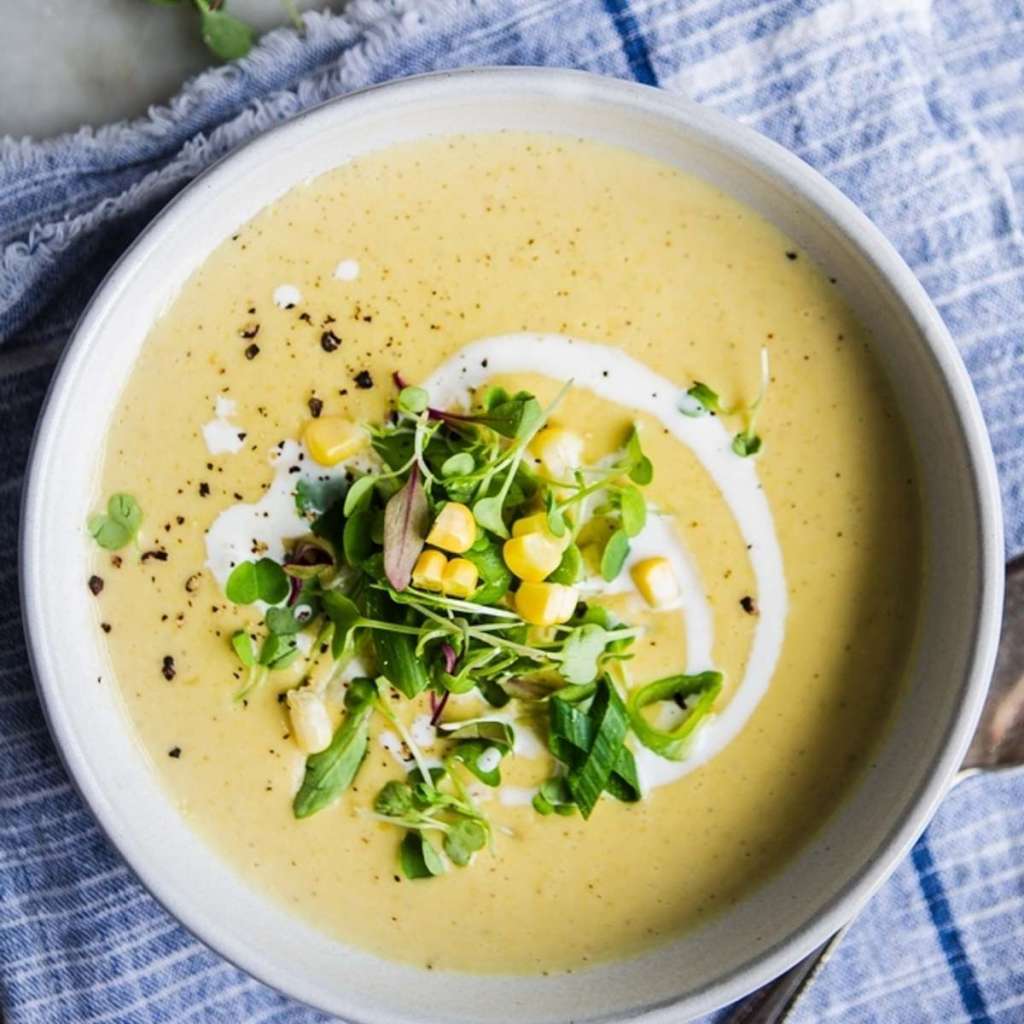
    For the Corn Bisque, I would love to implement some sort of pepper into the bisque, to give it some heat and maybe even a pop of color.

    I would love to add some lavender from the rooftop into the lamb, and possibly even into the parmesan risotto to add some earthy flavors to those two dishes. I would also love to add an abundance of herbs to the risotto (like pictured below) to add a pop of color to contrast with the dark rack of lamb.

    Plating Inspiration
    Plan of Work & Recipes
    Works Cited

    Central Grazing Company. (n.d.). How to cook lamb: A nose-to-tail guide on how to cook every lamb cut. Central Grazing Co. https://www.centralgrazingco.com/news-from-cgc/a-nose-to-tail-guide-on-how-to-cook-every-lamb-cut#:~:text=Fattier%20cuts%20of%20lamb%20should%20be%20roasted,technique%20for%20cooking%20less%2Dtender%20cuts%20of%20lamb

    Klimek, S. (2022, November 22). 15 mistakes everyone makes with homemade gnocchiTasting Tablehttps://www.tastingtable.com/1114200/15-mistakes-everyone-makes-with-homemade-gnocchi/