
Sensory Results
This week’s focus was on game birds—quail and pheasant—and the preparation of a gastrique, emphasizing balance between rich proteins and bright, acidic components. Working with quail and pheasant required precision and timing, as their lean meat can easily become dry if overcooked. Proper searing and roasting techniques helped maintain moisture while enhancing their naturally earthy, slightly gamey flavor. Each bird offered unique textures and nuances—quail being more tender and delicate, while pheasant presented a firmer bite and deeper flavor.
The gastrique component was essential in tying the dish together, teaching us how acidity and sweetness can enhance savory flavors. Reducing sugar and vinegar to create a balanced sauce required careful control and sensory awareness, as the line between sharp and subtle can shift quickly. When paired with the game birds, the gastrique added brightness and depth, cutting through richness while complementing the overall profile. This exercise reinforced the importance of balance, attention to detail, and the harmony between technique and taste in professional cookery.
Sustainability Analysis
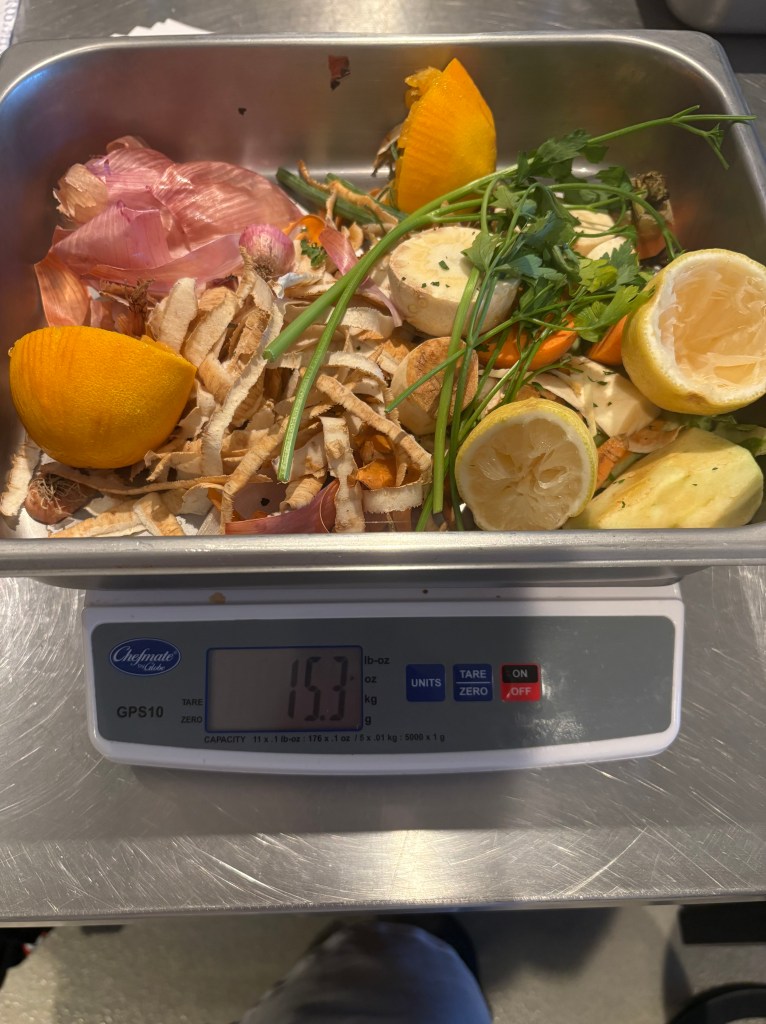
Our usable waste, weighing in at 15.3oz was due mostly to our mise and the typical scraps that come with a mise. LeanPath, a food waste-prevention company approximates this waste costing $0.07/oz, meaning $1.07 was wasted on this waste.
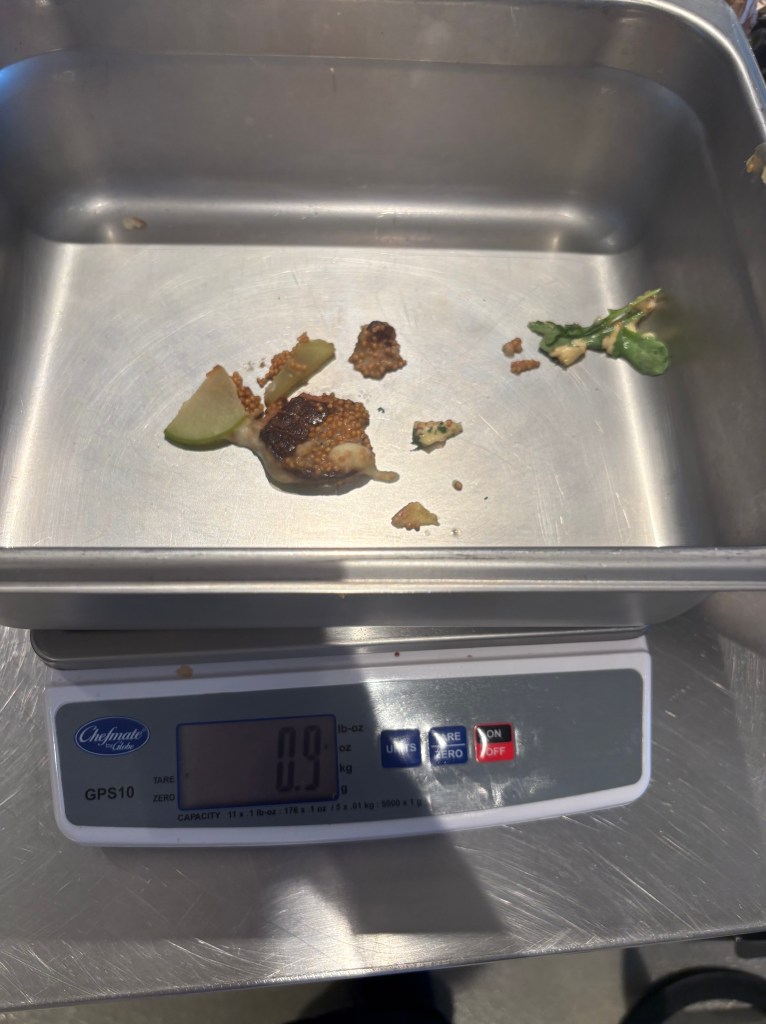
Our unusable waste, weighing in at 0.9oz was due to unusable fish shells and our tomato container. LeanPath also approzimates this waste costing $0.07/oz, meaning $0.06 was wasted on this waste.
I think our waste being lower than last week is a good sign, and that our group was definitely more attentive to our waste. We were also much more mindful as to where we placed items.
To be more sustainable in future labs, I will focus on reducing overall waste by planning portions more carefully and using ingredients more efficiently. I will make better use of leftover components by repurposing them into other dishes rather than discarding them. Additionally, I’ll be more mindful of energy and water usage during preparation and cleanup. By being more intentional with resources, I can help create a more environmentally responsible kitchen environment.
This week, the WACS Sustainability Certification mostly influenced my lab this week, because I feel that I was much more understanding of the different categories of waste.
 Jack Burke
Leave a comment