
Introductions
Custard-based desserts represent an essential category in pastry arts, relying on the precise coagulation of eggs to create smooth, rich textures. In this unit, our focus centered on two foundational custard preparations: baked cheesecake and crème brûlée. These desserts not only demonstrate different techniques within the custard family—stabilized custards versus stirred and baked custards—but also highlight the importance of temperature control and ingredient balance in achieving the correct consistency. Studying these two preparations provides insight into how classical custard theory informs modern pastry applications.
Background Information
Custards have been a part of European culinary tradition for centuries, with early versions appearing in medieval English and French cookery. Harold McGee notes that custards rely on the denaturation and bonding of egg proteins, which thicken liquids into a stable gel structure when gently heated. The ideal custard is smooth and tender, setting without curdling or becoming grainy. This delicate balance makes custard production an essential skill for pastry chefs.
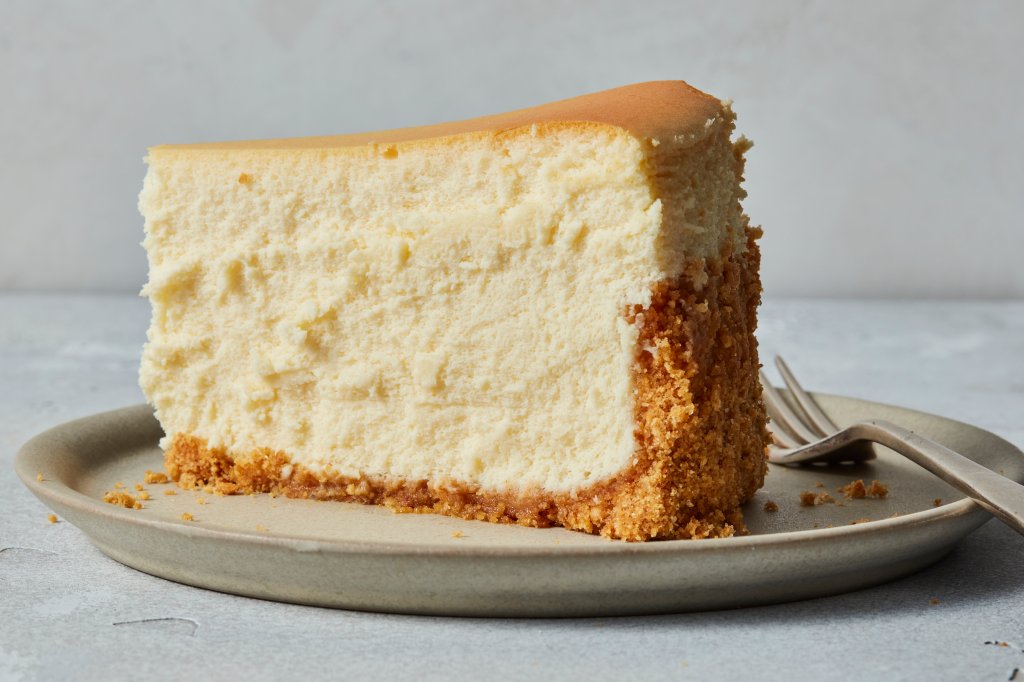
Cheesecake is considered a type of baked custard, despite its distinct identity in pastry culture. According to Professional Baking, the smoothness of cheesecake depends on controlled heat, minimal agitation, and often the use of a water bath to prevent cracking and overbaking. Cream cheese, eggs, and sugar create a dense yet creamy custard base, and baker error most commonly appears in the form of surface cracks or a crumbly texture due to excessive heat.
Crème brûlée is a classic French dessert in the stirred-and-baked custard category, composed of heavy cream, sugar, egg yolks, and vanilla. Its signature contrast—silky custard beneath a brittle caramelized sugar crust—relies on precision in both cooking phases. Research published in The Science of Cooking emphasizes that crème brûlée must be baked at low temperatures to prevent curdling, and its final brûlée is achieved with direct, rapid heat that caramelizes sugar without reheating the custard beneath. This combination of gentle preparation and dramatic finishing makes it a benchmark of technical proficiency in custard work.
Dish/Method Variations
Studying cheesecake and crème brûlée illustrates how variations in technique and composition produce entirely different textures within the custard category. Both desserts require strict temperature management and careful handling to achieve their characteristic smoothness. Understanding the science behind egg protein coagulation and heat application allows pastry cooks to diagnose issues such as cracking, curdling, or overbaking. Overall, this unit strengthened my grasp of custard theory and reinforced how mastering these fundamentals supports more advanced pastry work.
Recipes & Plan of Work
Works Cited
Gisslen, Wayne. Professional Baking. 7th ed., Wiley, 2017.
McGee, Harold. On Food and Cooking: The Science and Lore of the Kitchen. Scribner, 2004.
López-Alt, J. Kenji. The Science of Cooking. W. W. Norton & Company, 2017.
 Jack Burke
Leave a comment