
Introductions
Tortes and entremets represent two advanced categories of pastry that emphasize refined flavors, precise textures, and visually striking presentation. While both originate from European pastry traditions, their techniques and structural compositions differ significantly, offering valuable insight into modern dessert craftsmanship. This research explores the foundational characteristics of tortes and entremets, their production methods, and the culinary principles that define them. Understanding these components highlights the complexity of layered desserts and their importance in contemporary pastry work.
Background Information
Tortes are rich, dense cakes traditionally made with little to no wheat flour and instead rely on ground nuts, eggs, or breadcrumbs for structure. Their texture is often heavier than standard cakes, making them well suited for layered construction and rich fillings such as ganache, buttercream, or fruit preserves. Gisslen (2018) explains that tortes prioritize high-fat components—such as nuts and egg yolks—which contribute to their signature density and moistness. Many tortes, including the classic Sacher and Dobos tortes, demonstrate the importance of proper layering, syrup soaking, and controlled baking methods. These factors work together to ensure even moisture distribution, flavor balance, and the stability required for clean slices and elegant presentation.
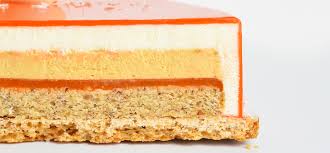
Unlike tortes, entremets are defined by their lightness, mousse-based structure, and complex multilayered design. They typically include components like sponge cake, mousse, crémeux, gelee, and crisp layers, all encased in a smooth exterior finish such as a glaze or velvet spray. According to The Culinary Institute of America (2016), entremets rely heavily on modern pastry techniques, including the use of molds, controlled freezing, and precise temperature management, to achieve their clean lines and contrasting textures. Contemporary entremets also emphasize visual artistry through mirror glazes and color gradients, reflecting the evolution of French pastry into a highly sculptural form. Because their structure depends on aerated components and stabilized creams, entremets require careful timing and accuracy to maintain integrity and achieve the desired textural experience.
Dish/Method Variations
Tortes and entremets showcase remarkable versatility, allowing pastry chefs to adapt flavors, textures, and presentations to different culinary styles and seasonal ingredients. Classic tortes might feature rich combinations like chocolate and hazelnut, almond sponge with raspberry, or flourless chocolate bases that emphasize density and depth. Meanwhile, modern entremets often experiment with layers such as mango-passionfruit mousse, matcha bavarois, pistachio crémeux, or Earl Grey-infused ganache to create contemporary flavor profiles. Beyond taste, variations also come from form — from traditional round cakes to mirror-glazed spheres, multi-portion bars, or individual petit entremets perfect for plated service. This adaptability not only highlights the technical range of these pastries but also demonstrates their ability to evolve with current trends in both flavor and visual artistry.
Recipes & Plan of Work
Works Cited
Culinary Institute of America. (2016). Baking and pastry: Mastering the art and craft (3rd ed.). John Wiley & Sons.
Gisslen, W. (2018). Professional baking (7th ed.). John Wiley & Sons.
 Jack Burke
Leave a comment