
Results
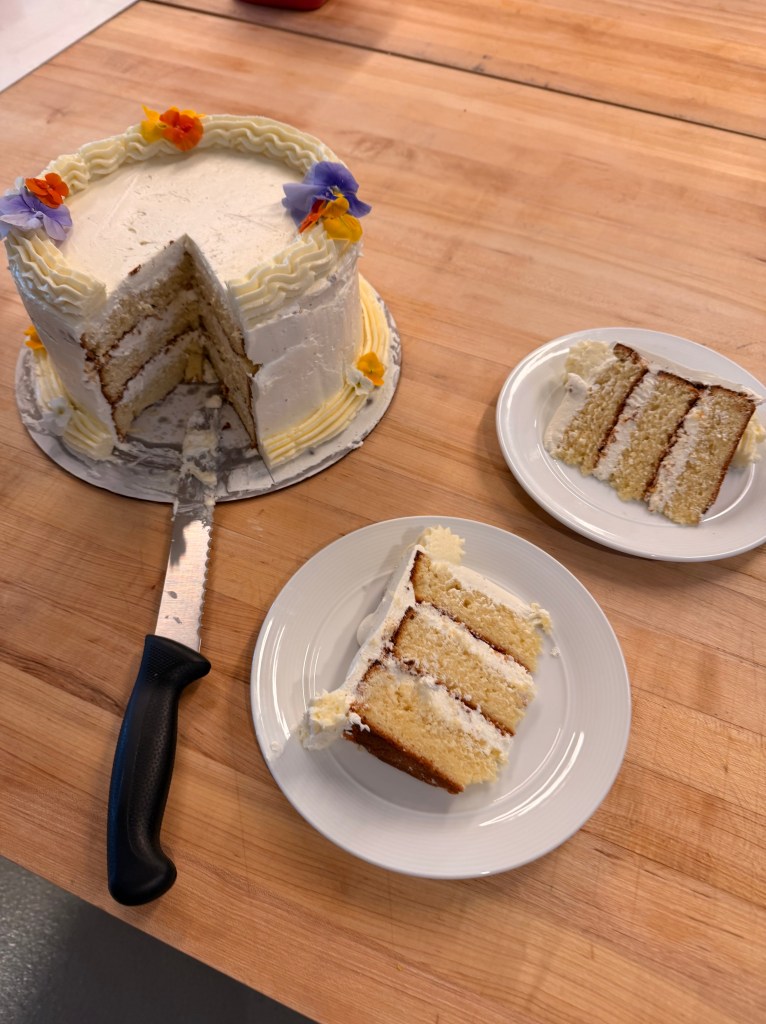
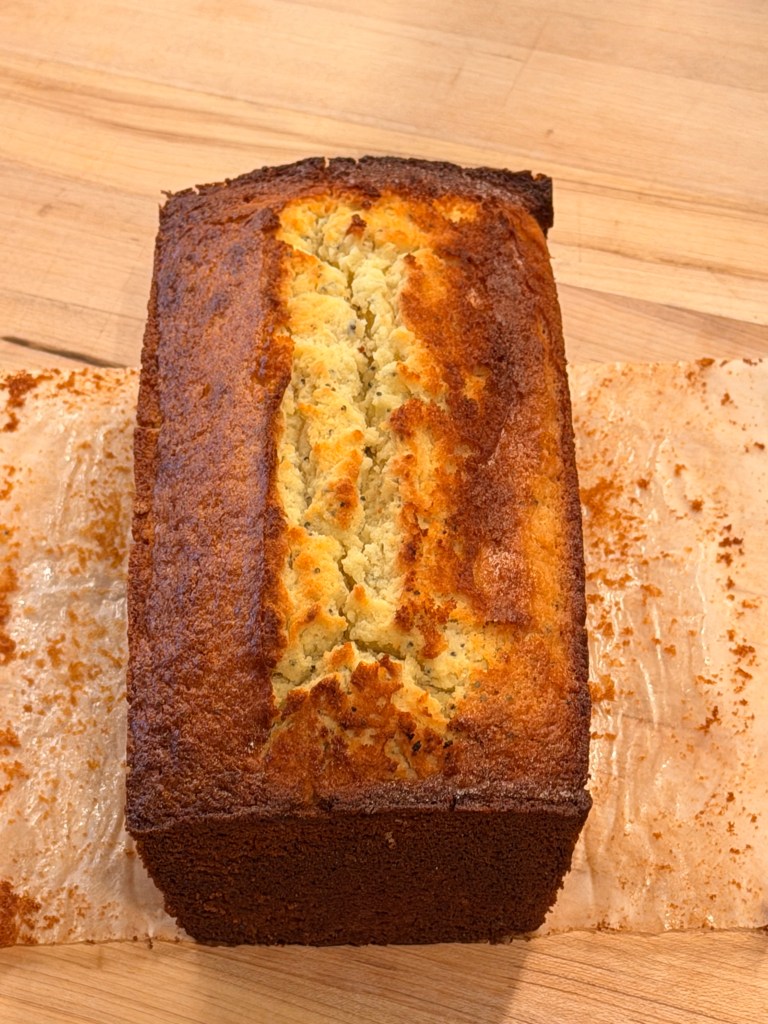
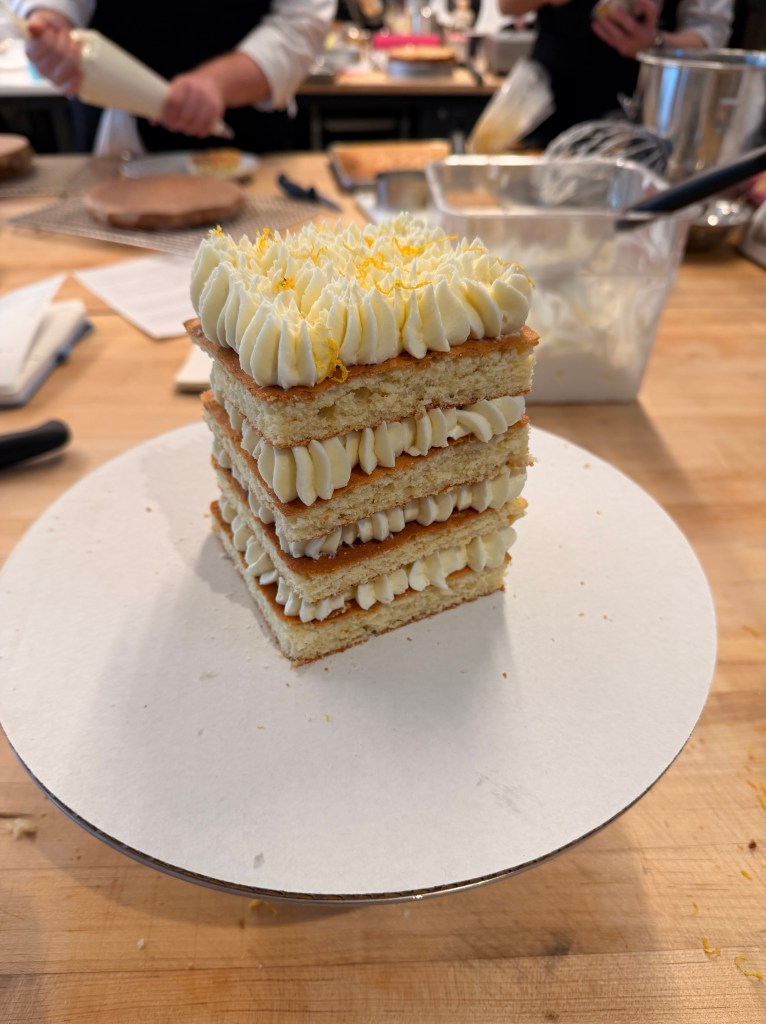
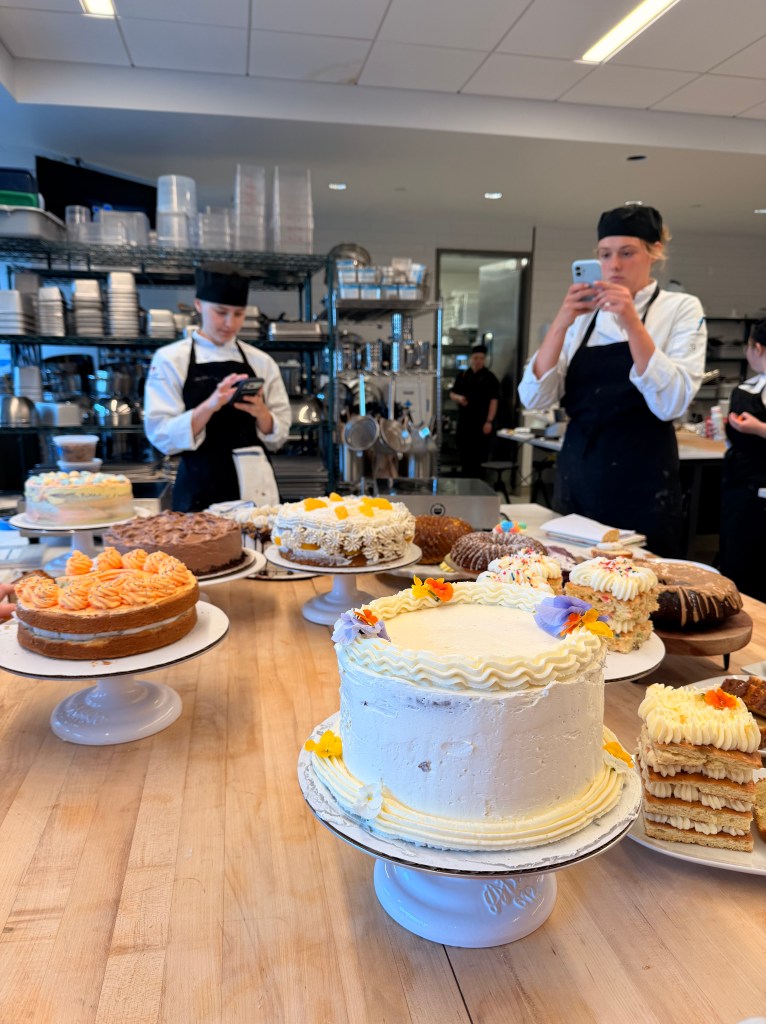
During this unit on cakes, icing, and piping, I gained hands-on experience working with foundational cake production techniques, including preparing stable cake layers, creating smooth buttercream icing, and practicing a variety of piping skills. I was able to produce evenly baked layers with consistent crumb structure, and my buttercream reached the correct texture for spreading and decorative piping. Through repeated practice, I became more confident in basic piping patterns such as shells, rosettes, borders, and simple lettering. These results demonstrated my growing technical control and my understanding of how temperature, consistency, and timing affect the final appearance of a finished cake.
Evaluation of Results
One of the most successful aspects of my work was the improvement in icing consistency and texture. According to The Culinary Institute of America (2016), proper icing consistency is essential for clean finishes and stable decorative work, and I found this to be true when adjusting the buttercream to the correct temperature and ratio of fat to sugar. When the icing was balanced properly, I was able to achieve smoother frosting and more defined piping patterns. My layer assembly also improved, particularly in leveling and crumb-coating, which contributed to a cleaner final presentation.
However, there were several challenges that became clear during the process. My piping control was inconsistent at times, especially when working with smaller tips that required steady pressure and uniform movement. As Gisslen (2018) explains, piping skills develop over long periods of practice, as they rely on both motor control and an understanding of how different icings behave. I also experienced difficulty maintaining the right temperature for buttercream during longer work sessions; warmer icing became too soft to hold shape, while colder icing became stiff and hard to pipe. These inconsistencies affected the precision of my decorations and showed me that environmental factors must be monitored closely.
Conclusion
Overall, this unit provided valuable experience in building foundational cake, icing, and piping skills. I saw clear improvement in my ability to prepare cake layers and work with buttercream, but I also identified areas—such as piping precision and temperature management—that require continued practice. This reflection helps guide my goals for future skill development as I continue to grow in pastry and baking.
Works Cited
Culinary Institute of America. (2016). Baking and pastry: Mastering the art and craft (3rd ed.). John Wiley & Sons.
Gisslen, W. (2018). Professional baking (7th ed.). John Wiley & Sons.
 Jack Burke
Leave a comment