
Introductions
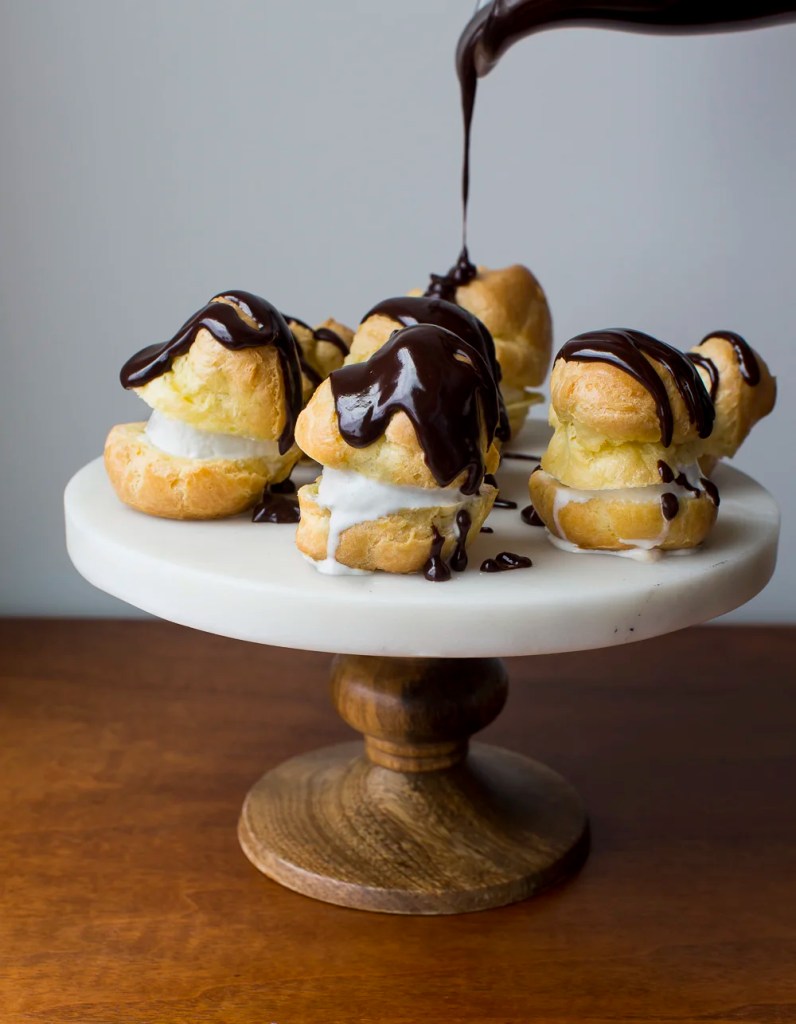
This week, we are going to be discussing and preparing proper components for pastries, such as pastry creams, ganache, and meringue. To showcase this in lab, we will prepare each as well as Pate a Choux, a French dessert that’s light, hollow, and typically filled with one of the above mentioned components. To dive into this week’s topics, I’m going to talk more about Pate a Choux, as well as the difference between Swiss and Italian Meringue, both of which we will be making this week.
Background Information
Pâte à choux is a classic French pastry dough known for its versatility and unique method of preparation. Unlike most doughs, it is cooked twice—first on the stovetop and then in the oven—which allows the high moisture content to create steam and puff the pastry during baking. The dough is made by cooking water (or milk), butter, and flour together before incorporating eggs, resulting in a smooth paste capable of holding its shape when piped. Pâte à choux serves as the base for a wide range of pastries such as éclairs, cream puffs, profiteroles, and gougères. According to King Arthur Baking Company, proper cooking of the flour and careful egg incorporation are essential to achieving the structure and hollow interior that define successful choux pastries.
Swiss and Italian meringues are both cooked meringue styles prized for their stability and smooth texture, though they differ in technique and application. Swiss meringue is prepared by gently heating egg whites and sugar together over a water bath until the sugar dissolves, then whipping the mixture to a glossy, stiff foam. Italian meringue, by contrast, involves pouring hot sugar syrup into whipped egg whites, creating the most stable of the three classic meringue styles. While Swiss meringue is often favored for its ease and balanced sweetness, Italian meringue is commonly used for buttercreams and decorative applications due to its superior structure. As explained by Serious Eats, the temperature and sugar concentration in each method directly influence texture, stability, and ideal culinary use.
Dish/Method Variations
This week’s recipes have many variations. Changes in crust style, filling consistency, and presentation allow the same foundational techniques to produce results that range from rustic and comforting to refined and elegant, reinforcing the importance of choosing methods that best support the desired outcome.
Recipes & Plan of Work
Works Cited
King Arthur Baking Company. (n.d.). Pâte à choux. https://www.kingarthurbaking.com
Serious Eats. (n.d.). The science of meringue: Swiss vs. Italian. https://www.seriouseats.com
 Jack Burke
Leave a comment