
Results
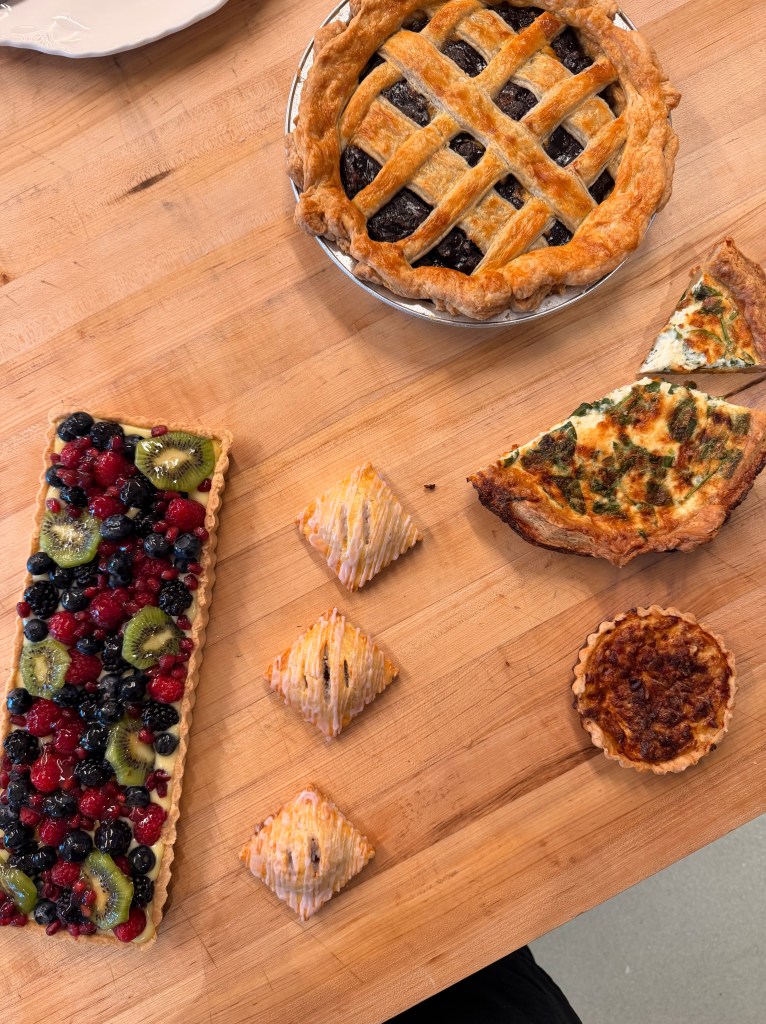
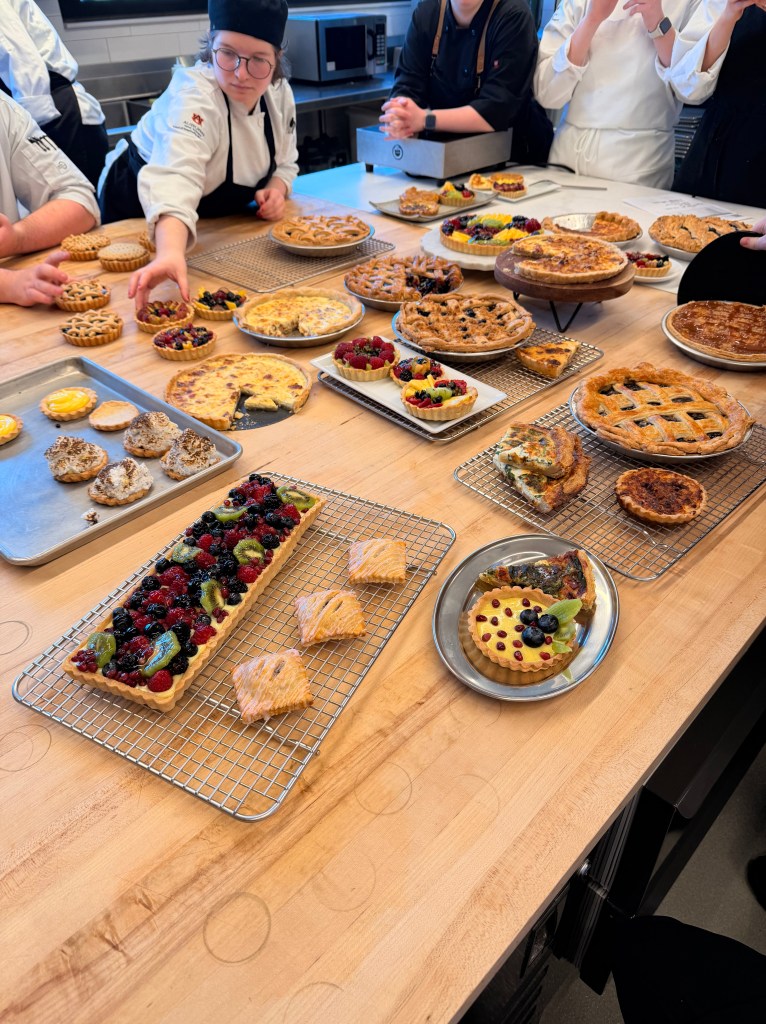
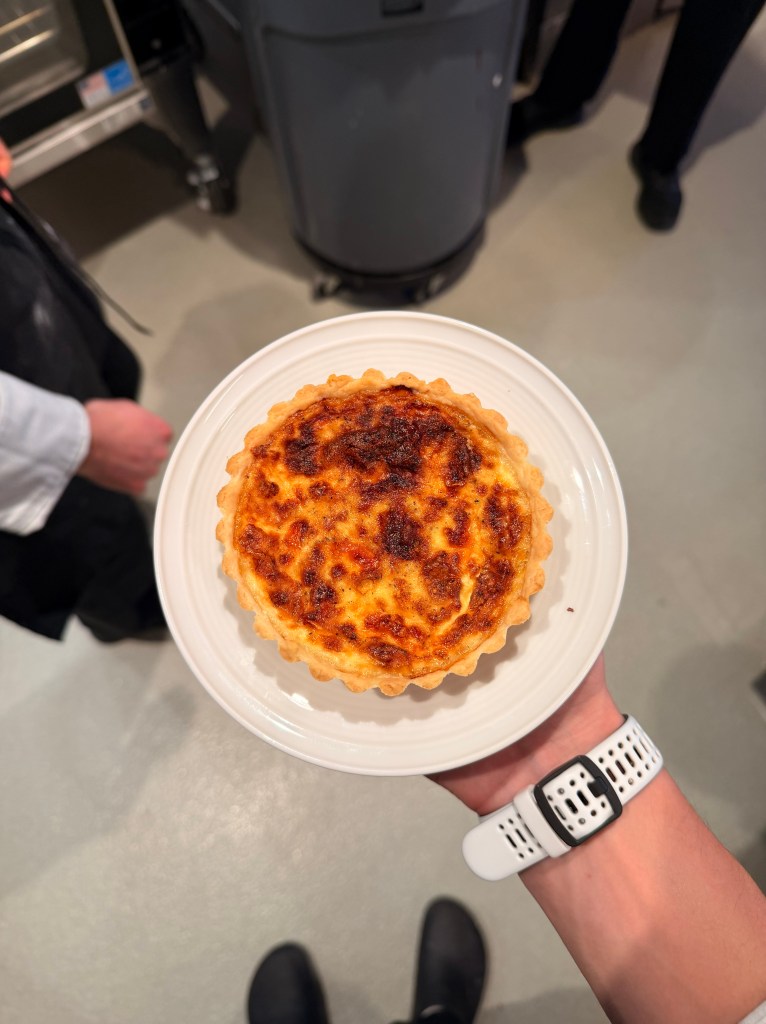
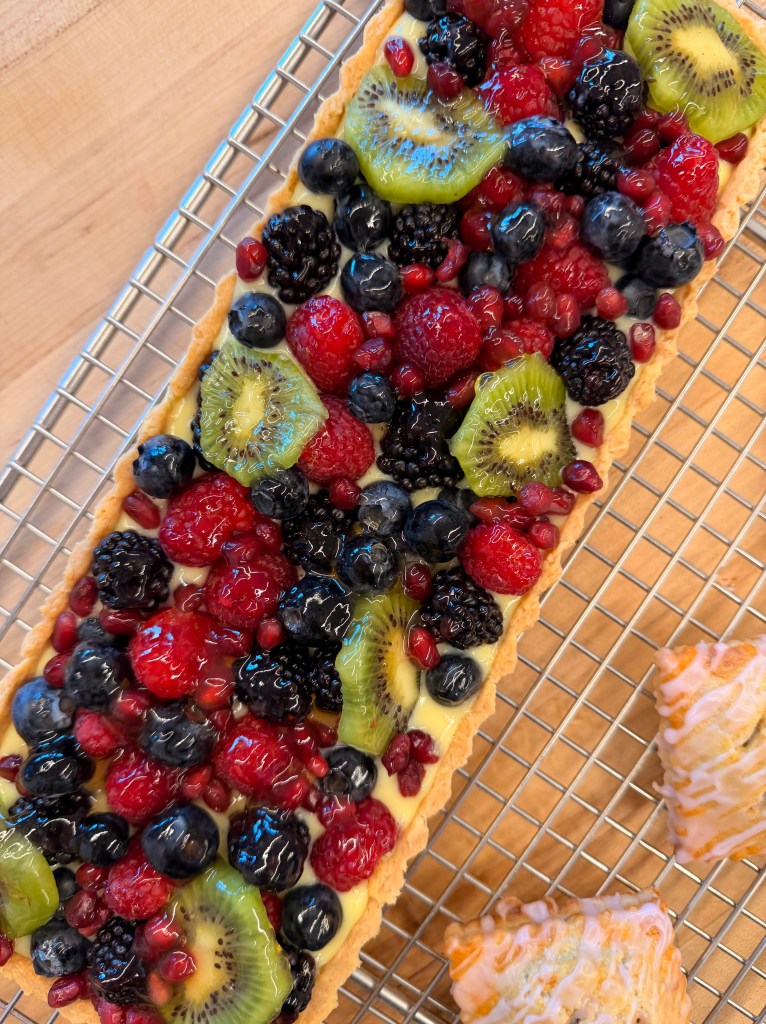
This week’s lab brought about great final products, and also some not-so-great products. Some of the things that were great would be our Fruit Tart, our Mini Quiches, and our Mini Hand Pies (filled with blueberry compote). Some of the not-so-great things were our pie dough being too frozen to work, so it ended up getting overworked. Also, our tart dough was unusable because it was so dry, so we ended up using our quiche dough instead. The last thing was that our pastry cream took two tries since the first batch ended up curdling. To evaluate, I’m going to talk about how to troubleshoot dry doughs and how to properly prepare a pastry cream.
Evaluation of Results
Preparing pastry cream successfully depends on precise temperature control, proper thickening, and continuous agitation. In practice, tempering the egg yolks slowly with hot milk is essential to prevent curdling, while constant whisking during cooking ensures a smooth, lump-free texture. Allowing the custard to come just to a boil activates the starch fully, producing a stable cream that holds its structure once cooled. Straining the finished pastry cream and pressing plastic wrap directly onto the surface minimizes lumps and prevents a skin from forming, resulting in a cleaner final product. These steps align with best practices outlined by King Arthur Baking Company, which emphasizes controlled heat and technique as key factors in achieving a silky, reliable pastry cream suitable for tarts, éclairs, and layered desserts.
Dry pie dough is often the result of insufficient hydration or over-flouring during mixing, but it can be effectively corrected with careful adjustments. Gradually incorporating small amounts of ice water or gently working the dough during rest allows moisture to redistribute without overdeveloping gluten. Allowing the dough to rest in the refrigerator is particularly important, as it relaxes the gluten structure and improves overall pliability. Avoiding aggressive kneading preserves tenderness while still bringing the dough together. According to Pastry Chef Online, patience and minimal handling are critical when rescuing dry dough, as rushing the process can compromise flakiness and lead to toughness rather than improvement.
Conclusion
In conclusion, I think it’s important to go low and slow on a pastry cream, and to work carefully with pie doughs so as to not over-mix or under-mix. It is super important to find that sweet spot as to not lend to any errors in the future.
Works Cited
King Arthur Baking Company. (n.d.). Pastry cream. https://www.kingarthurbaking.com
Pastry Chef Online. (n.d.). Pie dough basics and troubleshooting. https://pastrychefonline.com
 Jack Burke
Leave a comment