
Results
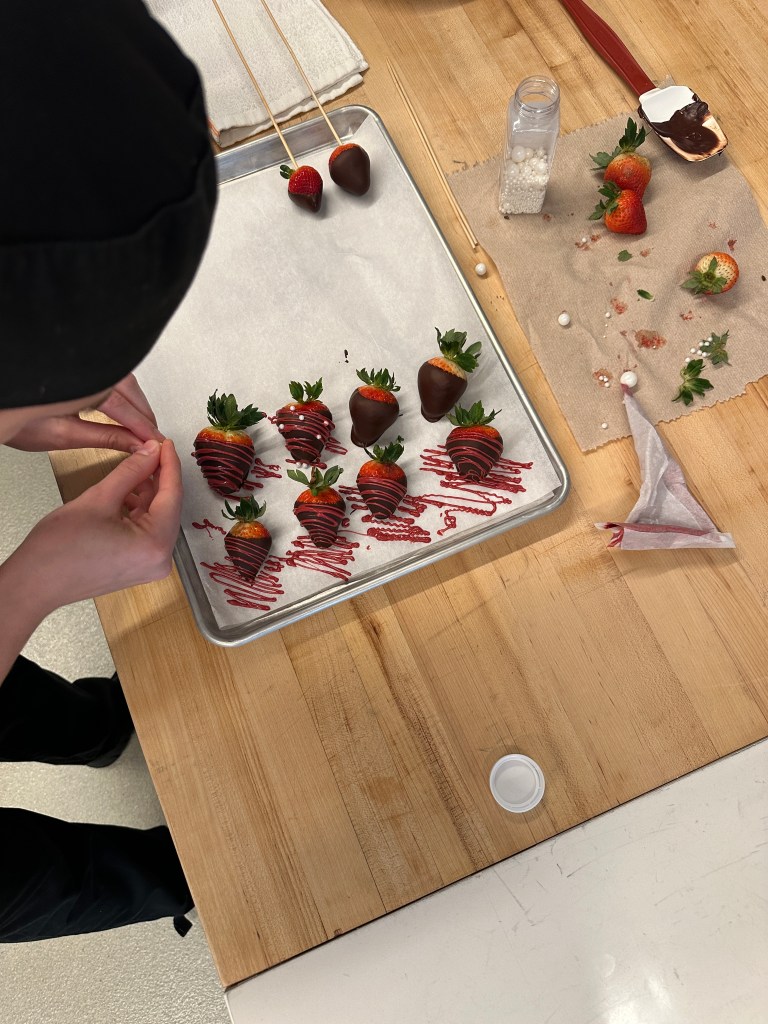
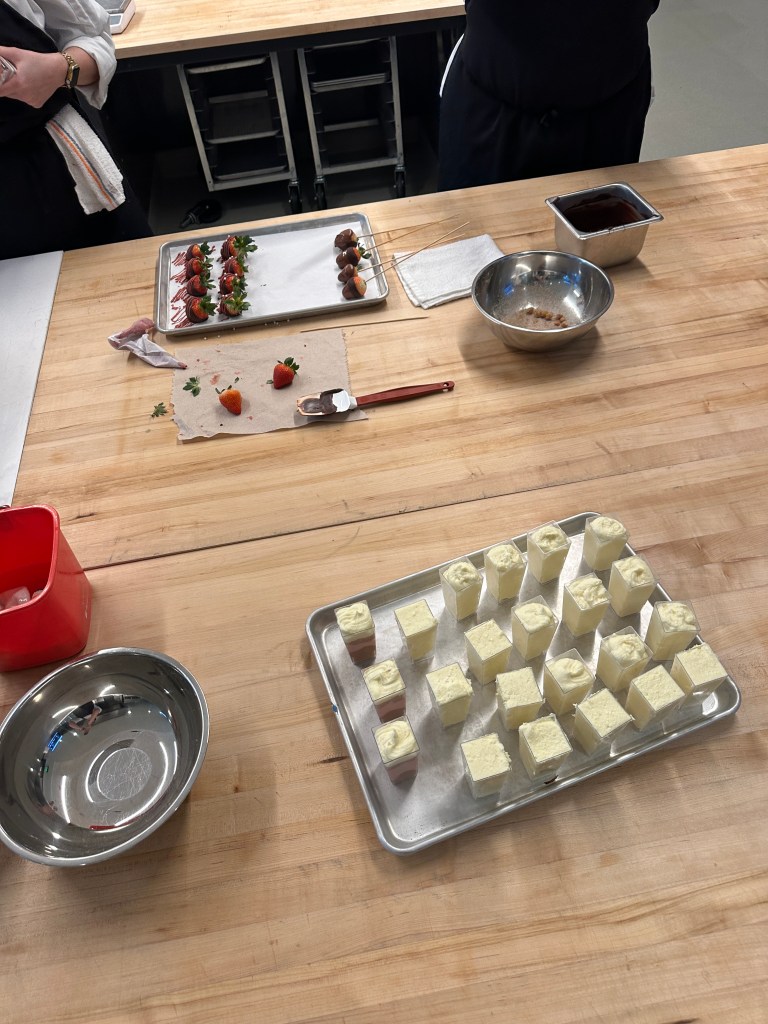
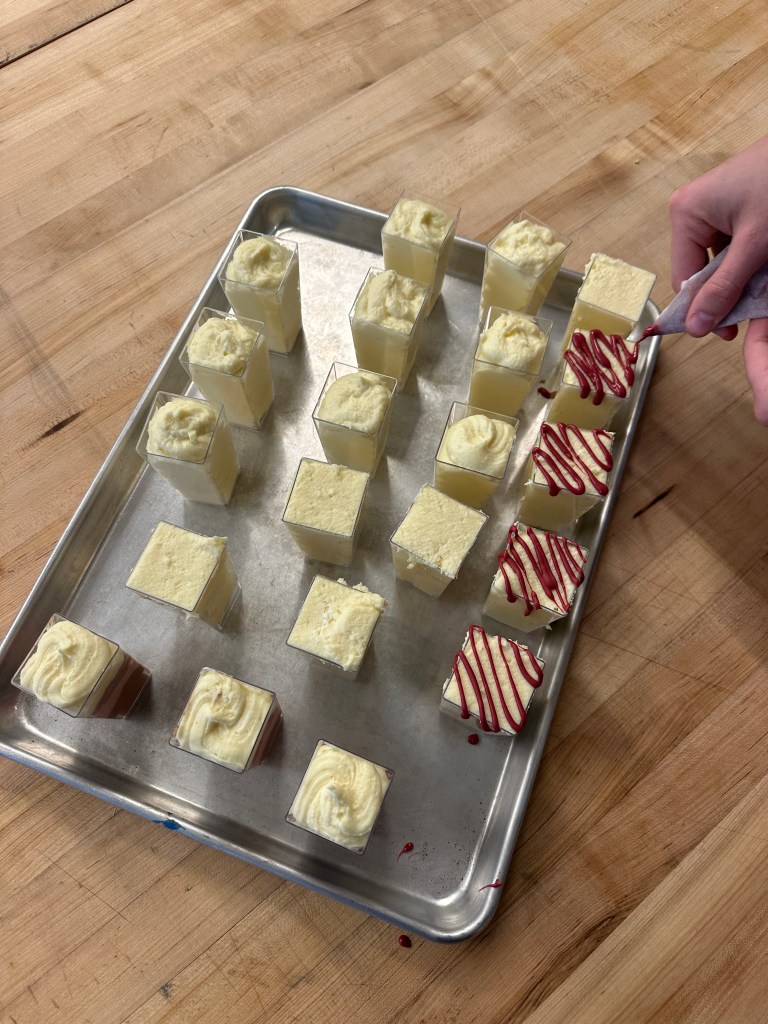
There were a couple of things that went wrong this past lab, but I think each was a learning opportunity. For starters, the white chocolate mousse recipe we used seemed a bit off when we started measuring, with the 4oz of gelatin looking like an insane amount for the recipe quantity we were preparing. We went ahead with the quantity after double checking with Chef Michael, and continued the recipe. When we finished the custard part of the recipe, we were told to cool it to 75 degrees, which resulted in a set, rubbery mixture. So, we had to use the immersion blender, blend in hot cream, and continue to immerse the mixture when we were supposed to fold it into the whipped cream. The result was a dense mousse, that flavor-wise was good, but the texture was very off.
Evaluation of Results
When researching I found two main troubleshooting issues with making white chocolate mousse. The first is using gelatin. I found in my research that a lot of professional chefs actually don’t use gelatin when making white chocolate mousse, as it can create a gelatinous texture rather than the light, fluffy texture you are aiming for. Chef Michael mentioned this at the beginning of lab that he had also never used gelatin in his mousse recipes, especially such an extreme amount like we had in our white chocolate mousse recipe. Nevertheless, it can be done, but most professional chefs tend to use the Italian Meringue method. (Basics of White Chocolate Mousse, 2007)
The second troubleshooting issue I found while researching is that it can be difficult to give off much chocolate flavor in white chocolate mousse, since white chocolate technically isn’t chocolate at all. I feel that our white chocolate mousse had a good flavor, and let out lots of white chocolate flavor as we intended. If it weren’t for the added cream when we were fixing our custard, I can only imagine how much more of that white chocolate flavor we would have gotten. One chef that I read said that he uses liquor (such as rum or brandy) or even rosewater to help give the white chocolate mousse a flavor boost. (Basics of White Chocolate Mousse, 2007)
Conclusion
While this lab didn’t go exactly as I would have hoped, it was a great learning moment for me to know how to troubleshoot filling recipes such as these again. I would love to try these recipes again, and play around with the different methods such as the Italian Meringue method which I hear works extremely well, especially in a professional setting.
Works Cited
Basics of White Chocolate Mousse. (2007, February 1). ChefTalk. https://www.cheftalk.com/threads/basics-of-white-chocolate-mousse.21143/
 Jack Burke
Leave a comment