
Sensory Results
This week’s sensory evaluations highlighted how contrasting techniques can create balanced, memorable dishes. Our seafood chowder delivered a rich, savory depth with a velvety mouthfeel that came from proper slow simmering and emulsification of dairy with seafood stock. The aroma was warm and oceanic without being overly briny, and each component—from tender pieces of fish to soft potatoes—offered a cohesive texture profile. The seasoning was well-rounded, and the final flavor lingered with subtle sweetness from the seafood and a pleasant herbal finish.
In contrast, the burrata dish showcased freshness, brightness, and textural interplay. The cream-filled center of the burrata provided a cool, delicate richness that paired well with the floral sweetness of the poached pears and the earthy crunch of toasted nuts. The grilled sourdough added a smoky aroma and crisp chew that grounded the softer elements. Together, the dish achieved a balanced sensory profile: creamy, crisp, sweet, smoky, and nutty, highlighting how thoughtful ingredient pairing and varied textures can elevate a simple composition into a refined appetizer.
Sustainability Analysis
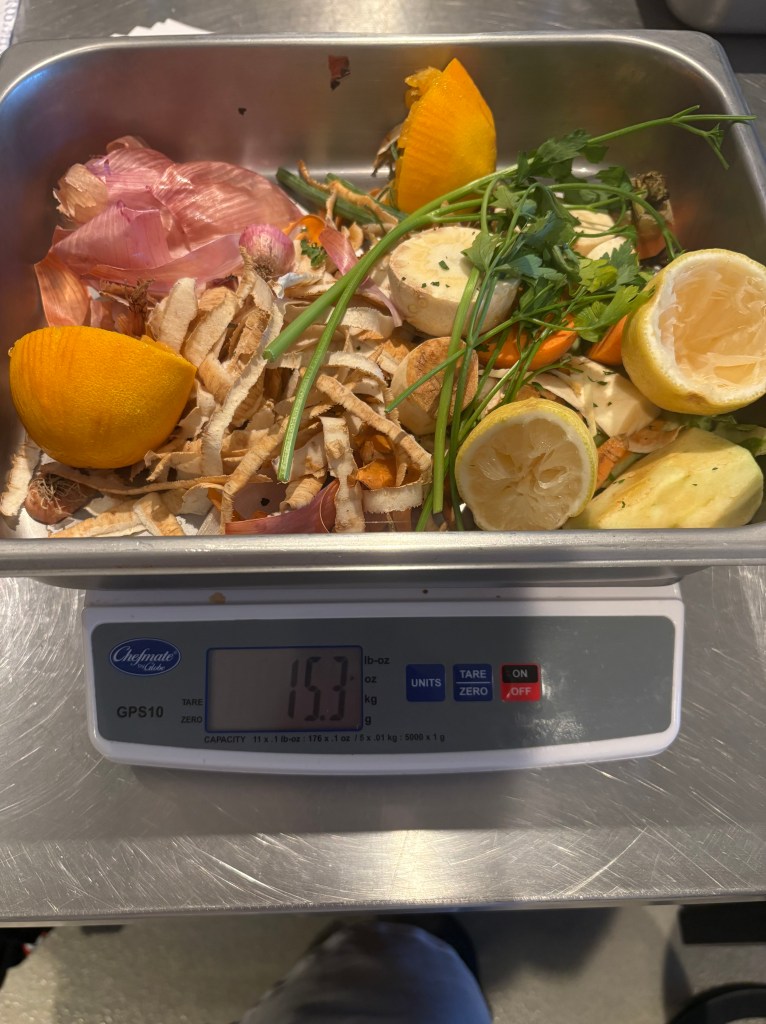
Our usable waste, weighing in at 15.3oz was due mostly to our mise and the typical scraps that come with a mise. LeanPath, a food waste-prevention company approximates this waste costing $0.07/oz, meaning $1.07 was wasted on this waste.
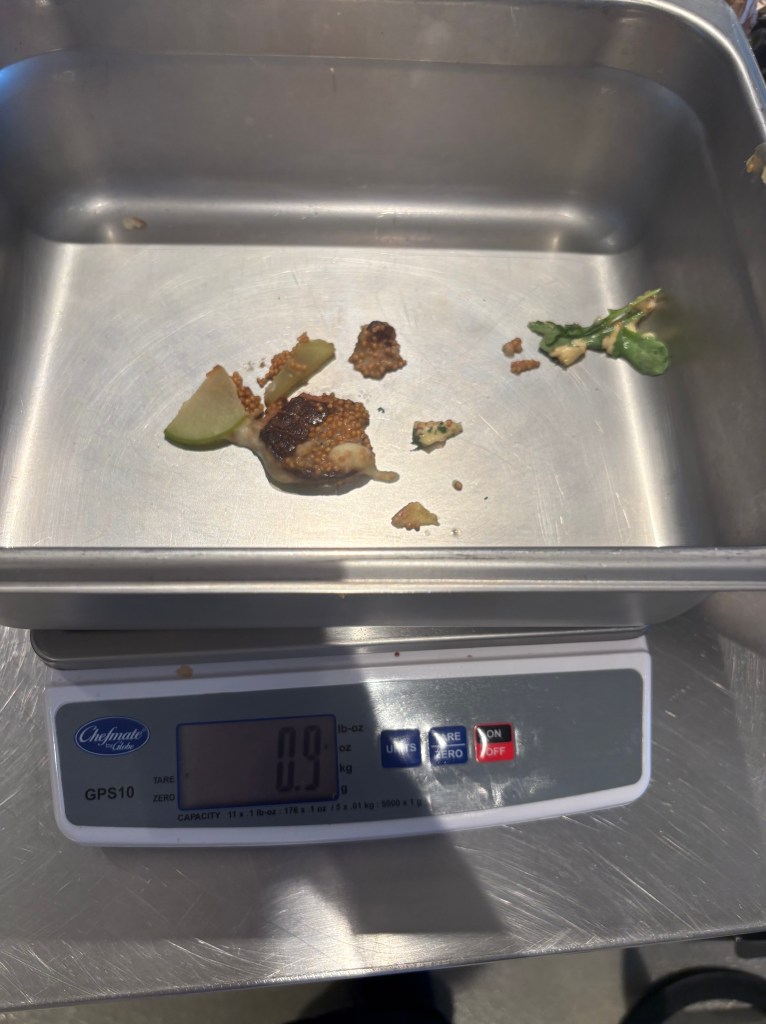
Our unusable waste, weighing in at 0.9oz was due to unusable fish shells and our tomato container. LeanPath also approzimates this waste costing $0.07/oz, meaning $0.06 was wasted on this waste.
I think our waste being lower than last week is a good sign, and that our group was definitely more attentive to our waste. We were also much more mindful as to where we placed items.
To be more sustainable in future labs, I will focus on reducing overall waste by planning portions more carefully and using ingredients more efficiently. I will make better use of leftover components by repurposing them into other dishes rather than discarding them. Additionally, I’ll be more mindful of energy and water usage during preparation and cleanup. By being more intentional with resources, I can help create a more environmentally responsible kitchen environment.
This week, the WACS Sustainability Certification mostly influenced my lab this week, because I feel that I was much more understanding of the different categories of waste.
 Jack Burke
Leave a comment