
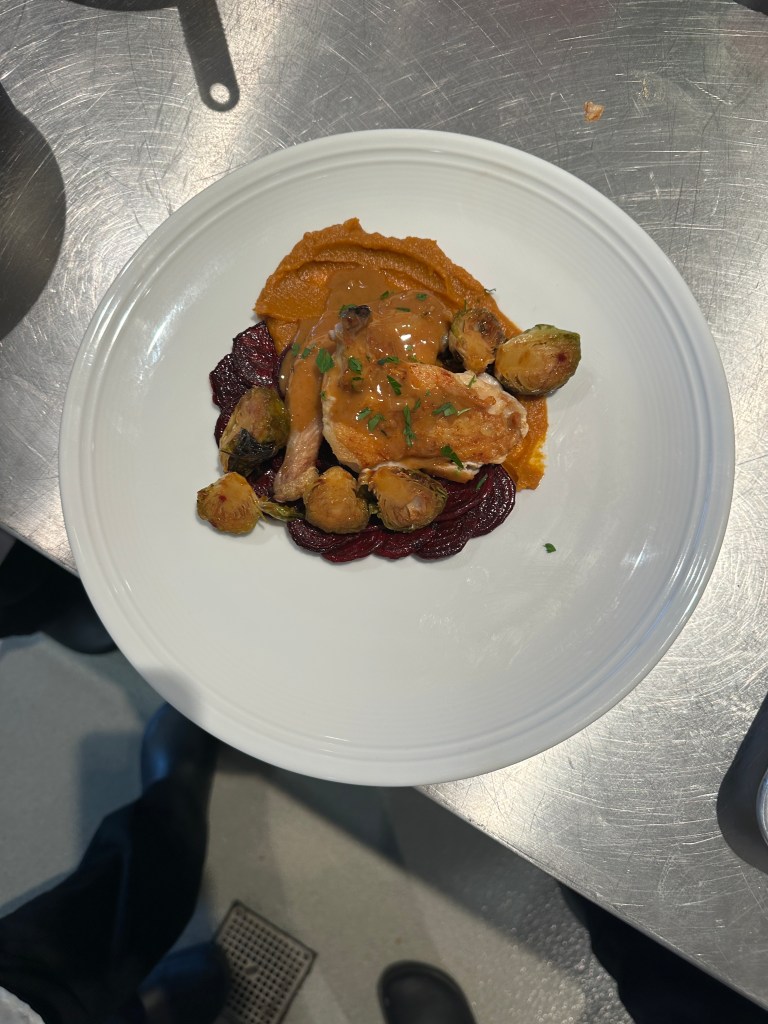
Sensory Results
The crab cakes stood out for their delicate texture and well-balanced seasoning. The sweetness of the crab was complemented by a light crispness on the exterior, giving a pleasant contrast of textures. The flavor was clean and fresh, and the accompanying sauce enhanced the natural richness without overpowering it. This dish demonstrated how simple ingredients, when handled carefully, can create depth and elegance.
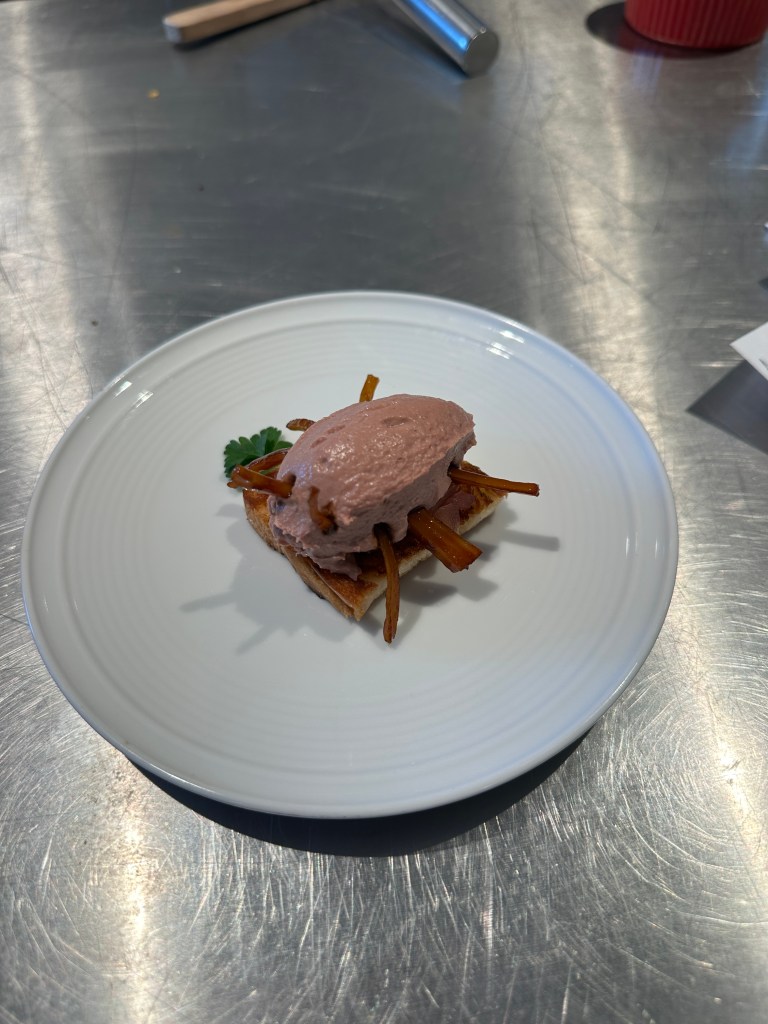
In contrast, the liver pâté presented a stronger, more acquired flavor profile. While I wasn’t personally a fan of the taste, I appreciated the technique and precision required to achieve its smooth texture and balanced seasoning. The richness of the liver was offset by acidity and sweetness from its accompaniments, which helped highlight how thoughtful pairing can transform intensity into refinement.
Finally, the seared chicken breast dish was the most visually and texturally balanced plate. The chicken was tender and juicy, complemented by the velvety sweet potato purée and earthy, slightly sweet glazed beetroot. The Brussels sproutsadded a necessary bitter note and textural contrast, tying the plate together. This dish demonstrated effective use of color, temperature, and flavor balance—skills that are central to refined plating and sensory appeal.
Sustainability Analysis
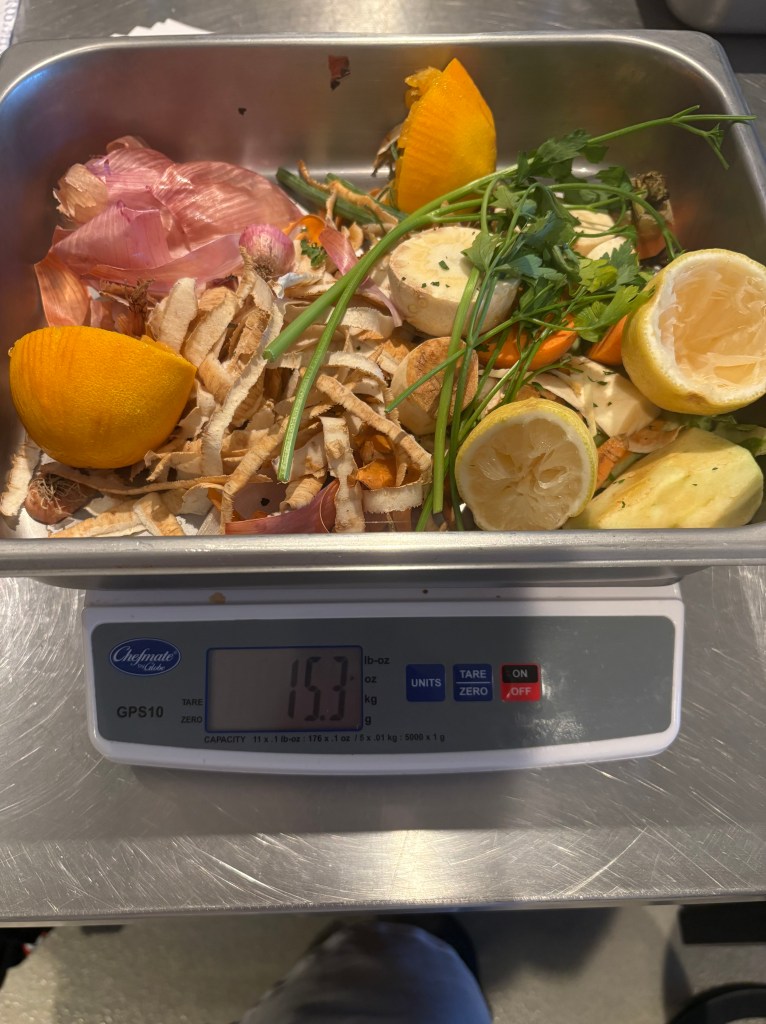
Our usable waste, weighing in at 15.3oz was due mostly to our mise and the typical scraps that come with a mise. LeanPath, a food waste-prevention company approximates this waste costing $0.07/oz, meaning $1.07 was wasted on this waste.
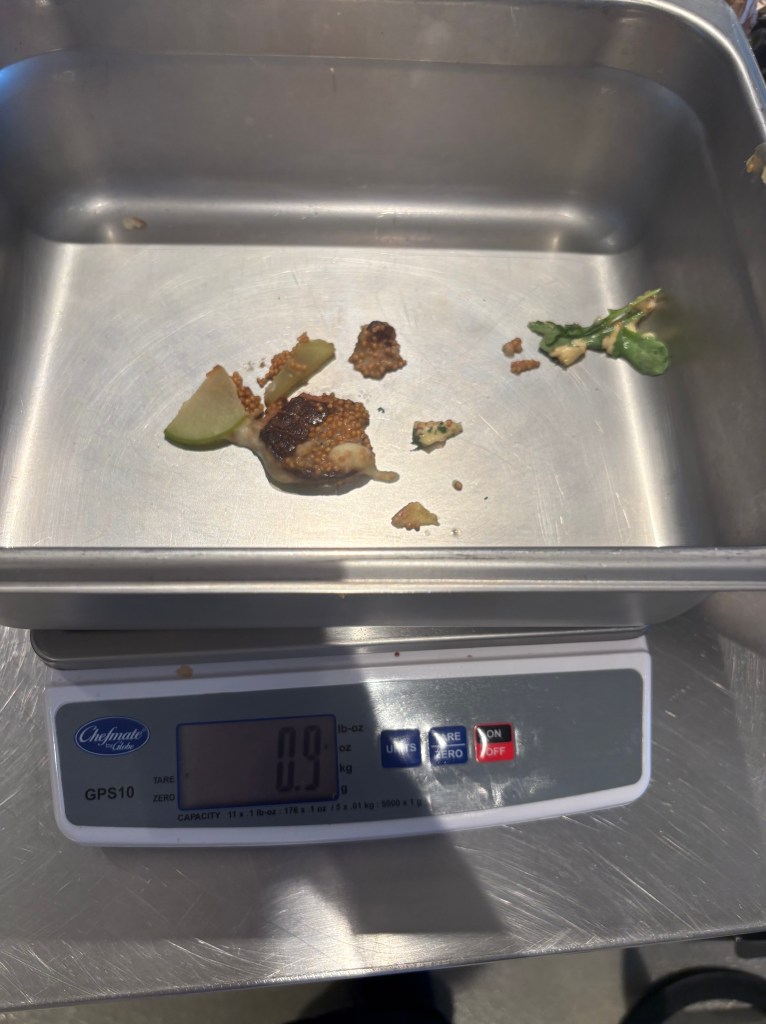
Our unusable waste, weighing in at 0.9oz was due to unusable fish shells and our tomato container. LeanPath also approzimates this waste costing $0.07/oz, meaning $0.06 was wasted on this waste.
I think our waste being lower than last week is a good sign, and that our group was definitely more attentive to our waste. We were also much more mindful as to where we placed items.
To be more sustainable in future labs, I will focus on reducing overall waste by planning portions more carefully and using ingredients more efficiently. I will make better use of leftover components by repurposing them into other dishes rather than discarding them. Additionally, I’ll be more mindful of energy and water usage during preparation and cleanup. By being more intentional with resources, I can help create a more environmentally responsible kitchen environment.
This week, the WACS Sustainability Certification mostly influenced my lab this week, because I feel that I was much more understanding of the different categories of waste.
 Jack Burke
Leave a comment