
Sensory Results
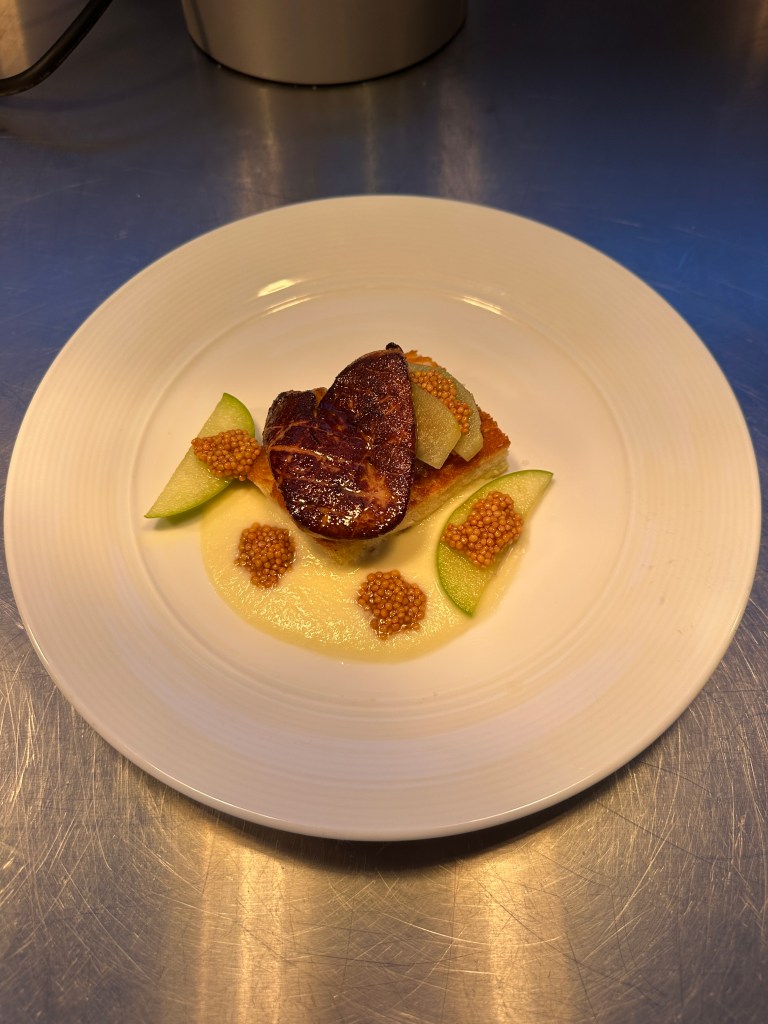
The seared foie gras presented a balance of richness and acidity that highlighted its luxurious texture. The smooth, buttery foie gras was complemented by the sweetness of the apple components—both the smoked-apple onion jam and the compressed apples—which provided contrast and freshness. The toasted brioche offered a necessary textural counterpoint, while the pickled mustard seeds introduced a bright tang and subtle heat that cut through the fat, creating a multidimensional tasting experience.
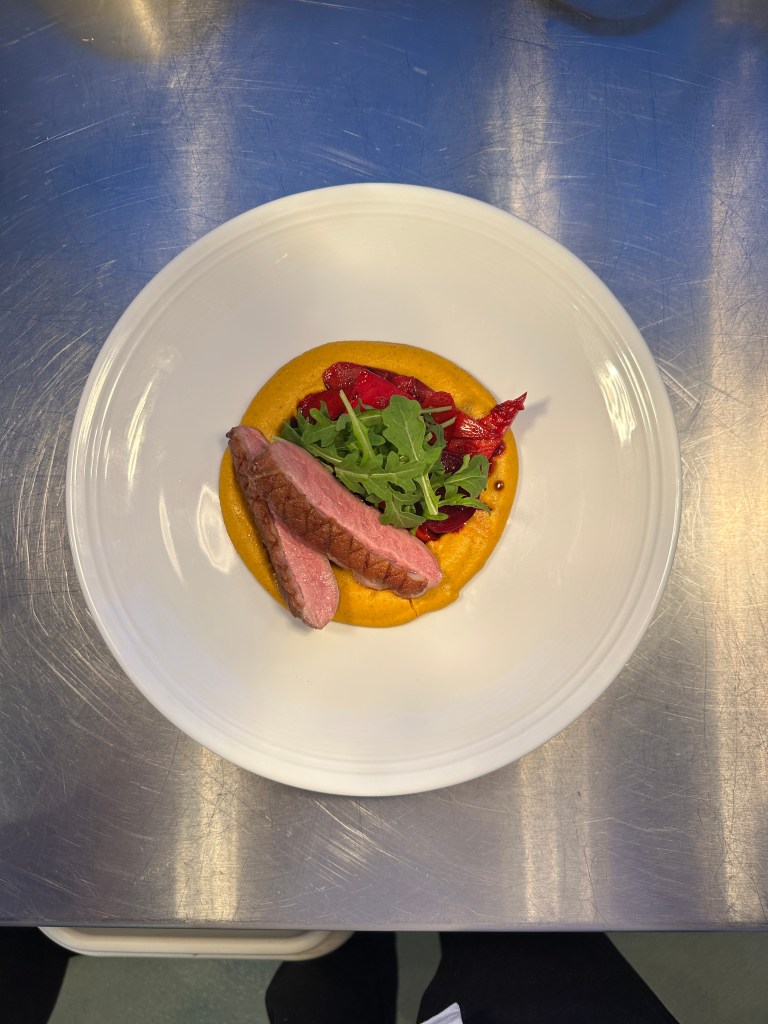
The seared duck breast was evaluated for its depth of flavor, tenderness, and harmony with the accompanying components. The rendered fat cap contributed to a crisp exterior and juicy interior, showcasing proper technique. The romesco sauce introduced smoky, nutty undertones that paired naturally with the duck’s gaminess, while the roasted vegetables provided earthiness and visual warmth. Together, the elements produced a cohesive plate where each component enhanced the main protein’s complexity.
Across both dishes, the sensory analysis emphasized balance, contrast, and precision in preparation. Textural interplay—creamy foie gras against crisp brioche, tender duck beside hearty vegetables—was central to the overall appeal. The plates demonstrated not only technical execution but also a thoughtful understanding of flavor layering and ingredient synergy, resulting in dishes that were both visually appealing and sensorially complete.
Sustainability Analysis
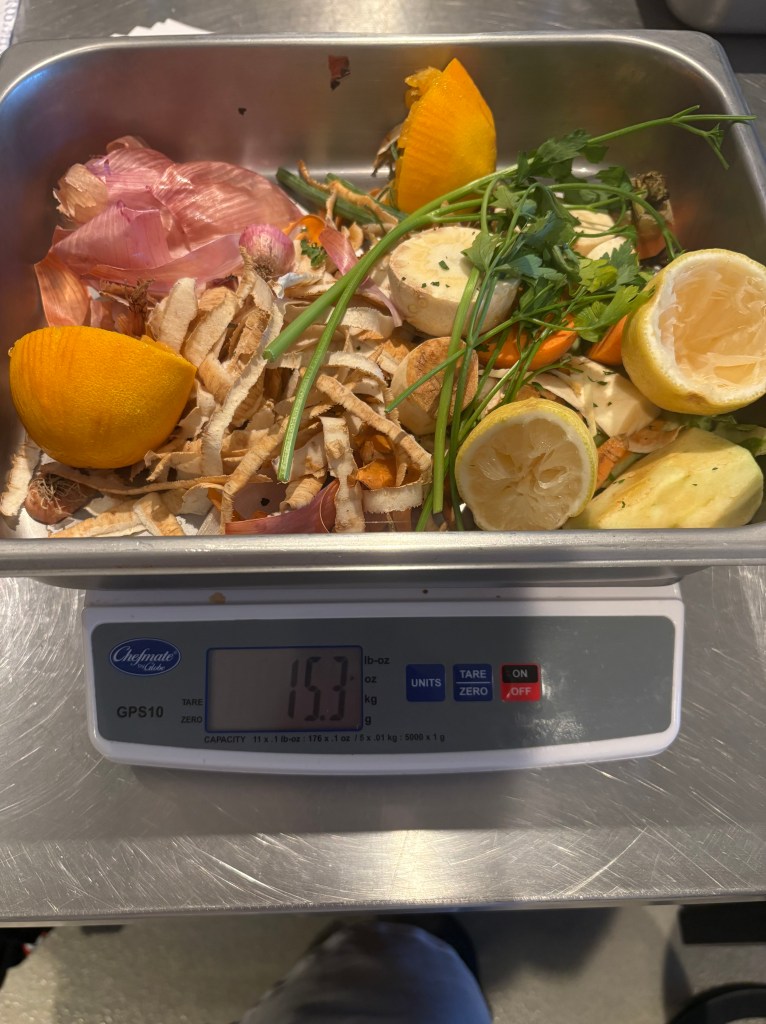
Our usable waste, weighing in at 15.3oz was due mostly to our mise and the typical scraps that come with a mise. LeanPath, a food waste-prevention company approximates this waste costing $0.07/oz, meaning $1.07 was wasted on this waste.
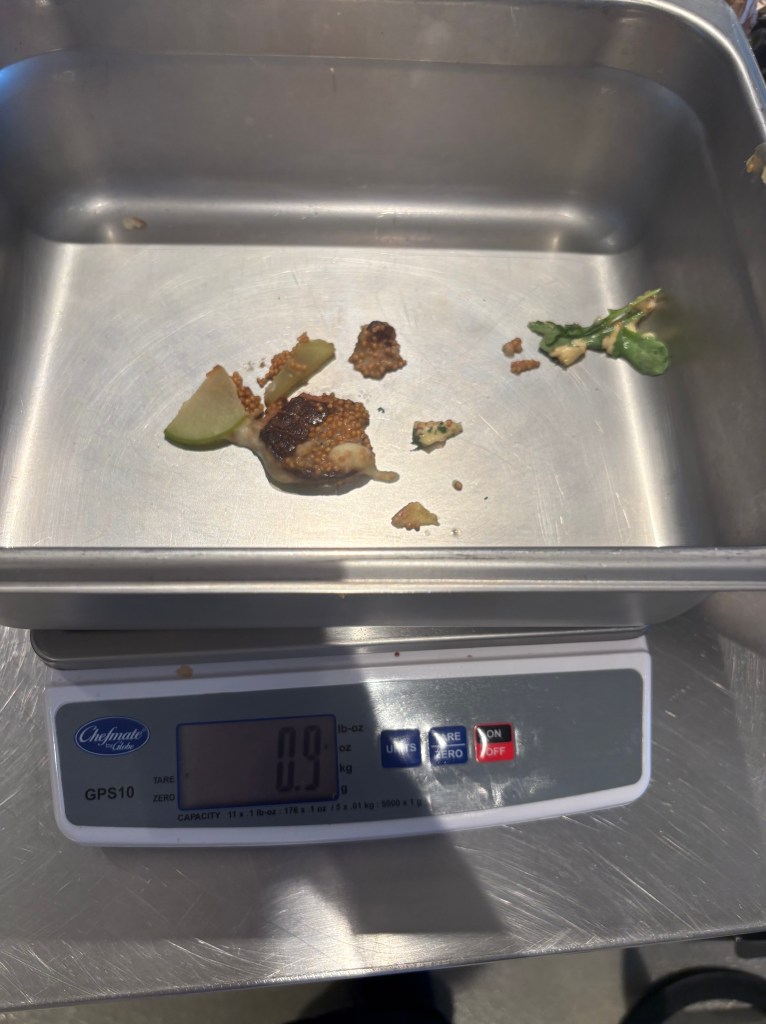
Our unusable waste, weighing in at 0.9oz was due to unusable fish shells and our tomato container. LeanPath also approzimates this waste costing $0.07/oz, meaning $0.06 was wasted on this waste.
I think our waste being lower than last week is a good sign, and that our group was definitely more attentive to our waste. We were also much more mindful as to where we placed items.
To be more sustainable in future labs, I will focus on reducing overall waste by planning portions more carefully and using ingredients more efficiently. I will make better use of leftover components by repurposing them into other dishes rather than discarding them. Additionally, I’ll be more mindful of energy and water usage during preparation and cleanup. By being more intentional with resources, I can help create a more environmentally responsible kitchen environment.
This week, the WACS Sustainability Certification mostly influenced my lab this week, because I feel that I was much more understanding of the different categories of waste.
 Jack Burke
Leave a comment